By Kathy Quirk
Caretaking is a universal fact of life.
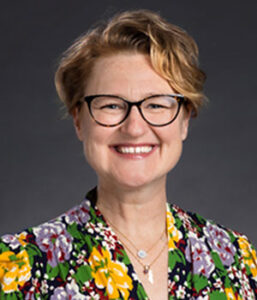
So sharing information and research about how different countries approach caregiving challenges is important, according to Melinda S. Kavanaugh, professor of social work in UWM’s Helen Bader School of Social Welfare.
That’s why she’s excited and honored to be chosen as a visiting professor at Northumbria University in Newcastle England, she said.
Kavanaugh’s research and teaching focus primarily on young caregivers in families managing chronic conditions such as Alzheimer’s, Huntington’s Disease and Amyotrophic Lateral Sclerosis (ALS).
Paul Watson, an associate professor and assistant director of the Northern Hub for Veterans and Military Families Research at Northumbria University, suggested to his university that she be invited to come there, according to Kavanaugh.
“We share some similar research interests on children and youth who are caregivers and military-connected caregivers,” Kavanaugh said. “He does similar work in the UK to what I do in the U.S. We’ve partnered on papers and some upcoming projects.”
While details of the visiting professorship are still being worked out, Kavanaugh will head to Northumbria in late summer. She will present an inaugural lecture and then travel back and forth between UWM and Northumbria over a three-year period. In addition, plans are being discussed to have Watson come to UWM as affiliate faculty.
Studying and researching in the UK can contribute to improving youth caregiving in the U.S.
“What’s really fantastic is that I am able to go to the UK and meet with different organizations and have conversations around children and youth who are caregivers,” said Kavanaugh, “because it’s part of their fabric there.” With national healthcare and social services, young caregivers are often an integral part of social programs, she added.
In the U.S., she added, “we find families have real difficulties accessing care and healthcare, especially specialized care,” she said. “So, when it comes to caregiving, whether it’s a child or an adult it’s very difficult and it can be much more complicated and more stressful.”
While social programs are different, studying and researching in the UK can contribute to improving youth caregiving in the U.S., she added.
“There are things we can definitely learn from them, and they can learn from us.”
Kavanaugh is one of a handful of researchers in the U.S. who study the young caregiver population. “Sharing my data and sharing some of the interventions and programs we’ve been able to put into place with them is really exciting.”