
Gain clinical knowledge and skills to serve the adoption and kinship network. The Training for Adoption Competency (TAC) online program offers intensive, evidence-based training specifically designed for social work, mental health and child welfare professionals.
TAC was developed by the Center for Adoption Support and Education (C.A.S.E.) in collaboration with mental health adoption and child welfare professionals throughout the U.S. Curriculum developers use feedback from participants and trainers to continually improve the content. TAC is the only certificate accreditation program for adoption competency.
Explore the TAC Program
- Enhance your skills working with adoptees, prospective adoptive parents, and adoptive and kinship families.
- Complete a 72-hour training program with 12 accredited modules.
- Earn 66 CEH hours from the National Association of Social Workers (NASW).
- Engage in case studies, role plays, and introspective work in each module. Case consultations are incorporated into the training.
Application Deadline: March 9, 2026
Cohort 27
- March 2026 to Aug. 2026
- Two Fridays per month
- 9 a.m. to 4 p.m. CDT
Cohort 28
- March 2026 to Nov. 2026
- Two to three Fridays per month
- 9 a.m. to 12:30 p.m. CDT
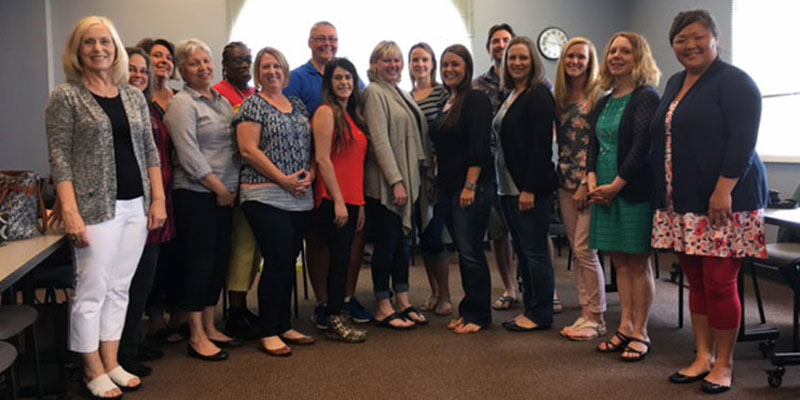
Training for Adoption Competency participants.
Online Training
- TAC consists of 12 online modules on various aspects of adoption practice.
- Participants will need a computer with a web camera and microphone.
Cost
- None. Participant Fee Waived for 2026.
- March 2026 to Aug. 2026
- Two Fridays per month
- 9 a.m. to 4 p.m. CDT
| Module 1 | You will complete this module on your own. |
| Module 2 | March 13, 2026 |
| Module 3 | March 27, 2026 |
| Module 4 | April 17, 2026 |
| Module 5 | April 24, 2026 |
| Module 6 | May 15, 2026 |
| Module 7 | May 29, 2026 |
| Module 8 | June 5, 2026 |
| Module 9 | June 19, 2026 |
| Module 10 | July 10, 2026 |
| Module 11 | July 24, 2026 |
| Module 12 | Aug. 7, 2026 |
- March 2026 to Nov. 2026
- Two to three Fridays per month
- 9 a.m. to 12:30 p.m. CDT
| Module 1 | You will complete this module on your own. |
| Module 2 | March 13 and 20, 2026 |
| Module 3 | March 27 and April 10, 2026 |
| Module 4 | April 24 and May 1, 2026 |
| Module 5 | May 15 and 29, 2026 |
| Module 6 | June 12 and 26, 2026 |
| Module 7 | July 10 and 24, 2026 |
| Module 8 | Aug. 14 and 28, 2026 |
| Module 9 | Sept. 11 and 25, 2026 |
| Module 10 | Oct. 9 and 16, 2026 |
| Module 11 | Oct. 23 and Nov. 6, 2026 |
| Module 12 | Nov. 13 and 20, 2026 |
| Module 1 | Adoption History, Law & Process (You will complete this module on your own) |
| Module 2 | Theoretical and Empirical Framework of Adoption Competent Mental Health Practice |
| Module 3 | Meeting the Mental Health Needs of Adopted Individuals and Their Families |
| Module 4 | The Impact of Separation, Loss and Grief: Clinical Strategies for Healing |
| Module 5 | Trauma and Brain Neurobiology |
| Module 6 | Enhancing Parent-Child Attachment |
| Module 7 | Supporting Identity Formation for Adolescents and Young Adults |
| Module 8 | Supporting Children, Youth, and Families as They Prepare for Adoption |
| Module 9 | Clinical Issues in Working with Birth and Kinship Families |
| Module 10 | Openness in Adoption |
| Module 11 | Honoring Roots and Fostering Belonging |
| Module 12 | Therapeutic Parenting: Parents as Primary Vehicles for Healing |
Education and Licensure
- A minimum of a master’s degree in social work, counseling, psychology or related discipline.
- It’s preferred that participants either have a current professional license or are under clinical supervision preparing for professional licensing.
Employment
- Participants must be working in a clinical capacity with adoptive families.
- If applicants don’t meet the above criteria but interact with the adoption kinship network, they will be considered for the TAC program as space allows.
From 2016 to 2020, approximately 700 children were adopted each year in Wisconsin. In 2020, 11,303 children were in an out-of-home care placement at some point during the year. Of the children in an out-of-home placement, 32.9% were in a relative placement (i.e., kinship care).
Adoption failures or dissolutions, or adoptions in which children are returned to state care after finalization of adoption, has been estimated to be between two to 10% nationally, but there is not yet good information on the rate in Wisconsin.
According to the Center for Adoption Support and Education (CASE), children with traumatic experiences of abuse, neglect and abandonment, and challenging behavioral and emotional responses are at greater risk of presenting with adjustment problems within their adoptive families, which creates vulnerability and risk of family disruption.
Access to adoption-competent mental health services is a critical factor in the outcomes for these children and their adoptive families, and impacts the success of adoption.
To fill this need, CASE has developed the Training for Adoption Competency (TAC) program to increase the number of professionals who are able to provide treatment services to these individuals and families. The end goal of increased access to adoption competent mental health, adoption, and child welfare practitioners is improved well-being of adopted children and their families and a decrease in adoption dissolution.

- Program Coordinator, Office of Research Administration
- mheller@uwm.edu
- 414-229-4895
- Enderis Hall 1185


- Research Administrator, Office of Research Administration
- schmiddj@uwm.edu
- 414-229-6096
- Enderis Hall 1181