
Videos
- Categories:
- Atmospheric Science
- Biological Science
- Chemistry
- Geosciences
- Physics
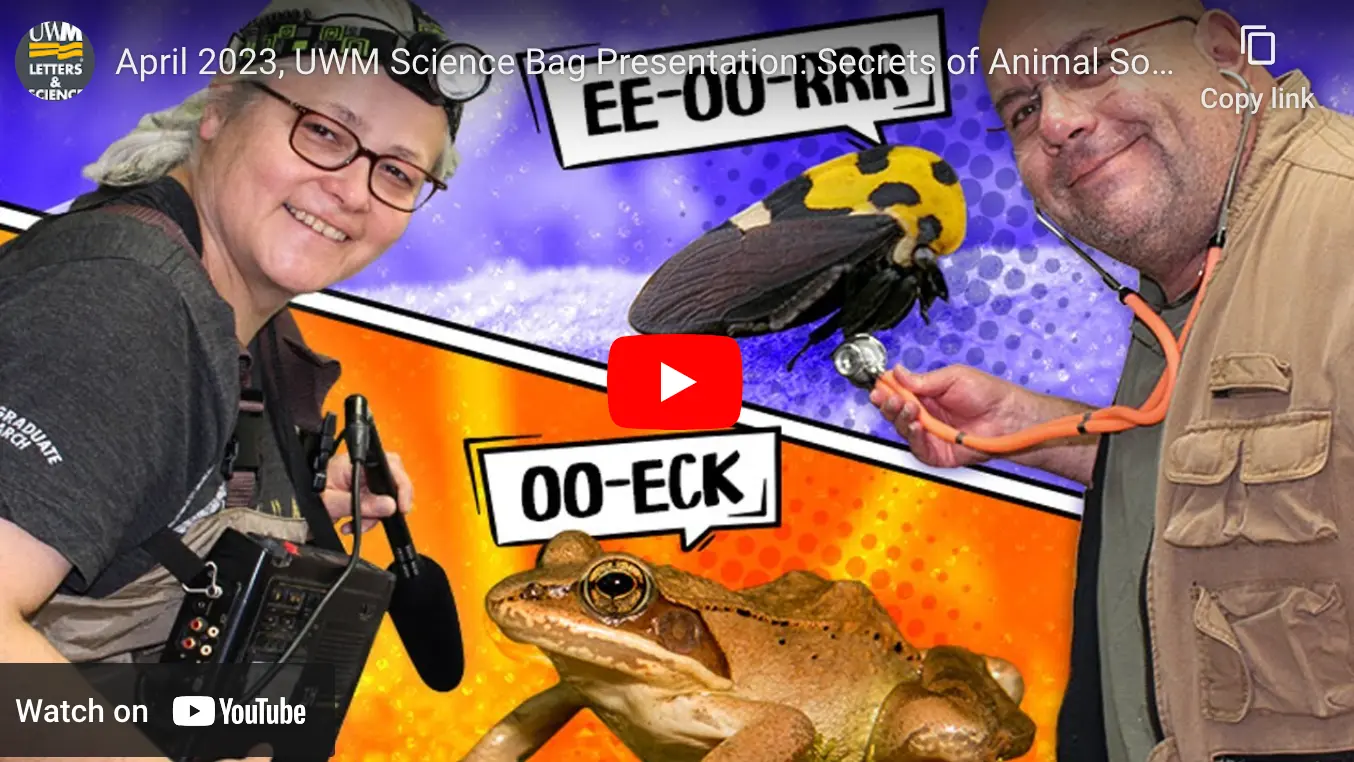
- Secrets of Animal Sounds: The Music of Insects & FrogsGerlinde Höbel, Associate Professor UWM Dept. of Biological Sciences Rafael Rodríguez, Professor UWM Dept. of Biological Sciences All animals communicate. How that is done, of course, varies by the creature …
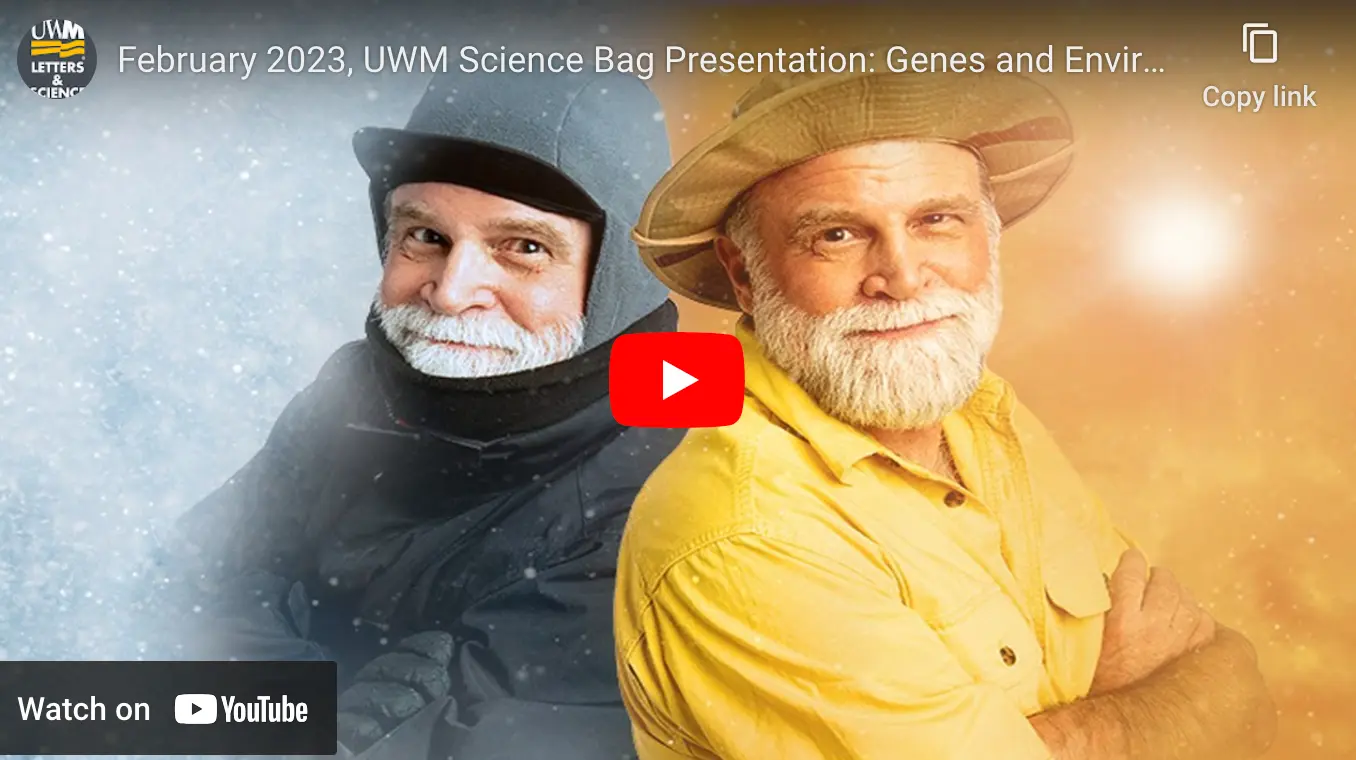
- Genes and Environment: Adapting to Changing ConditionsMichael Carvan, Shaw Professor UWM School of Freshwater Sciences When environmental conditions change, animals must also change, in order to live. In this program, we will explore some truly unique …
- A Cold Wind Off the Lake… In August?Presented by Carmen Aguilar and Russell Cuhel from UWM’s School of Freshwater Science. In 2015, a previously unusual weather pattern caused dramatic late summer cooling along the western shore from …
- Friend or Foe? The Two Faces of MicrobesThe Two Faces of Microbes” describes what a microbe is, and then covers some interesting facts and perspectives about microbes. On one hand, they are essential to life, on the …
- Wisconsin Rocks!Whatever rock genre you’re into — classic rock, soft rock or alternative rock, the Badger state has all three. But they’re not on your iPod — they lie just beneath …
- Matters of the Heart: Cells and Cardiovascular DiseaseBiologist Julie Oliver explains the inner workings of our heart and circulatory system in “Matters of the Heart: Cell and Cardiovascular Disease.” With audience participation, Oliver will unravel how blood …
- Scientists Who Turned the World Upside DownIn "Scientists Who Turned the World Upside Down," mathematician Bart Adrian takes audience members on a trip through the history of game-changing discoveries by Galileo, Newton, Einstein, Richardson and Lorenz …
- Hidden Colors RevealedWith color, what you see isn't always what you get. Discover the reasons in "Hidden Colors Revealed" when UWM chemist Alan Schwabacher shows various ways that color can be present, …
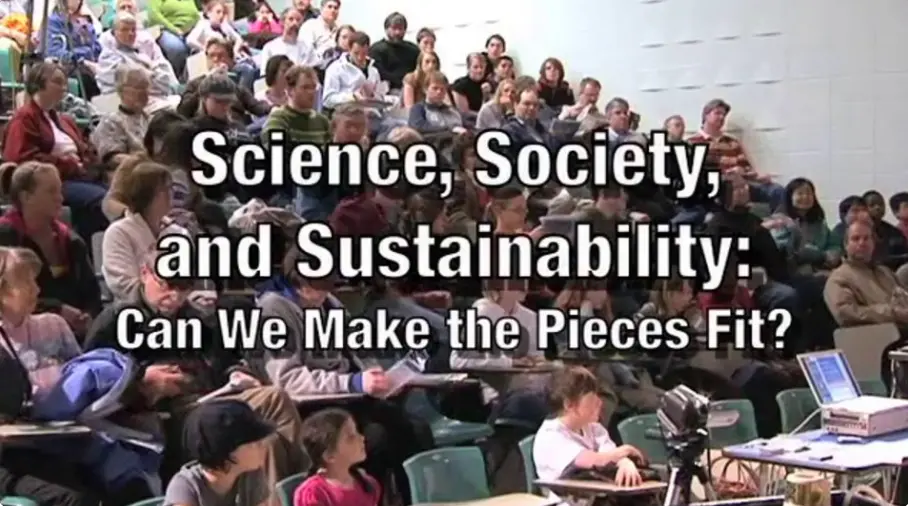
- Science, Society and Sustainability: Can We Make the Pieces Fit?Knowing how parts of nature interact in time and space is critical to our understanding of sustainability. Ecologist Tim Ehlinger looks at our interaction with the land from our first …
- A Survey of SpacetimeJolien Creighton — Geometry was invented to measure the Earth—to survey plots of land and to find distances between towns. We now use the same surveying methods to measure the …
- Mussel Beach: The Crushing Weight of Invasive SpeciesCarmen Aguilar and Russell Cuhel — Quagga mussels seem like invaders from another planet. Are they going to crush the historic wrecked ships on the bottom of Lake Michigan with …
- The Evolution of Life: From Microbes to DinosaursHave you ever wondered how geologists reconstruct the Earth's history? Join geologist Steve Dornbos as he takes you on a journey through geologic time showing us how fossils are formed, …

2024 Science Bag Presentations
February

Junjie Niu
Associate Professor
Materials Science and Engineering (UWM College of Engineering & Applied Sciences)
Lithium Ion Batteries:
Making Mobile Magnificent
How is it possible for the tiny battery in your cell phone to stay charged for numerous days? Or how is it that we can now drive electric cars, in some cases for very long distances?
In this talk, I will explain the principles behind lithium ion batteries — how they store electricity and how this impacts our lives.
Friday, 2/9/2024 @ 6 PM
Friday, 2/16/2024 @ 1 PM
Sunday, 2/18/2024 @ 3 PM
March
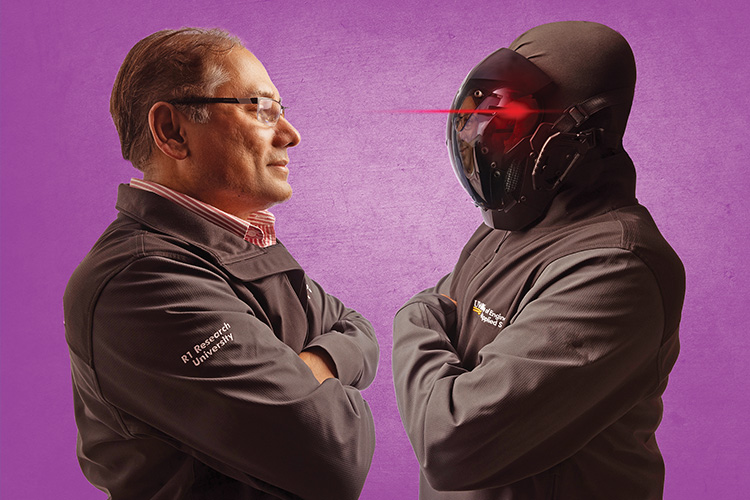
Prasenjit Guptasarma
Professor
UWM Dept. of Physics (College of Letters & Science) and Associate Dean for Academic Affairs (UWM College of Engineering & Applied Sciences)
Artificial Intelligence:
Friend or Foe?
Recent developments in Artificial Intelligence (AI) have generated much excitement mixed with some anxiety and foreboding. AI now has the potential to become almost human.
Can it also be our friend? Through this talk, we will explore the history, the scientific background, and the possible future of this new technology at a level accessible to people of all ages and backgrounds.
Friday, 3/1/2024 @ 6 PM
Friday, 3/8/2024 @ 1 PM
Sunday, 3/10/2024 @ 3 PM
April

Peter Hinow
Professor
UWM Dept. of Mathematical Sciences (College of Letters & Science)
Mr. Turing and His Amazing Machine:
The Simplicity of the First Computer
Can you imagine a computer with infinite memory? Surely, such a machine should/would be infinitely powerful (?). Surprisingly, there are problems that even such a computer cannot solve.
In this presentation we will explore the life and work of Alan Turing (1912 – 1954), a stellar mathematician, codebreaker and visionary of computer science and theoretical biology.
Friday, 4/12/2024 @ 6 PM
Friday, 4/19/2024 @ 1 PM
Sunday, 4/21/2024 @ 3 PM
2023 Science Bag Presentations
February
Genes and Environment: Adapting to Changing Conditions
Michael Carvan
Shaw Professor
UWM School of Freshwater Sciences
When environmental conditions change, animals must also change, in order to live. In this program, we will explore some truly unique ways that animals use to adapt to environmental extremes to enhance survival. We also look at molecular processes used by some animals which allow them to adapt to both short- and long-term environmental changes.
March
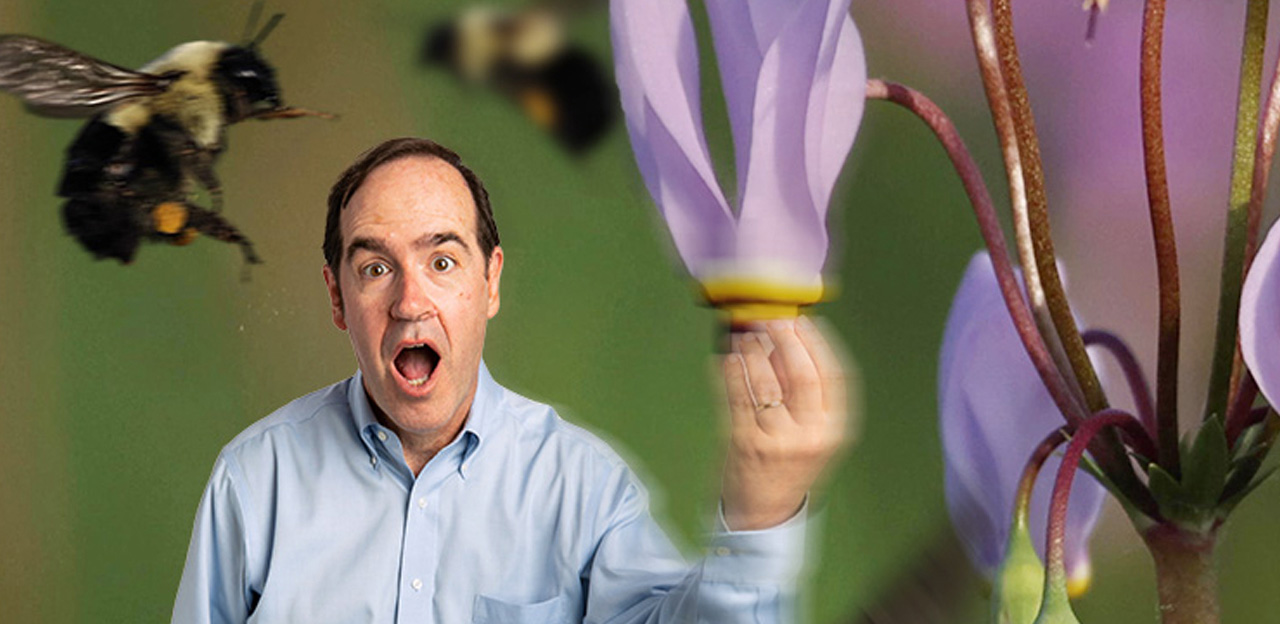
Buzzing Bees and Shooting Stars: Pollination in the Prairie
Jeffrey Karron
Professor
UWM Dept. of Biological Sciences
Using high resolution, slow motion video, this multimedia extravaganza will show how bees ensure the survival of “shooting star,” a beautiful plant native to wet prairies of SE Wisconsin. In particular, this plant requires bees to vibrate their bodies at very high rates (frequencies), causing the flower to explosively release its pollen onto their bodies!
April
Secrets of Animal Sounds: The Music of Insects & Frogs
Gerlinde Höbel
Associate Professor
UWM Dept. of Biological Sciences
Rafael Rodríguez
Professor
UWM Dept. of Biological Sciences
All animals communicate. How that is done, of course, varies by the creature and the purpose. This presentation focusses on treefrogs and treehoppers, whose sometimes raucous choruses provide an ideal way in which to ask questions and learn about the social and environmental factors that govern their lives.