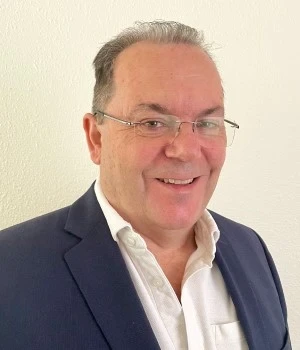
Gabriel Rei-Doval
- Associate Professor, Linguistics
Education
- PhD, Galician Linguistics, University of Santiago de Compostela, 2001
- MPhil, Galician Linguistics, University of Santiago de Compostela, 1999
- BA, Galician Philology, University of Santiago de Compostela, 1990
Office Hours
Tuesdays 11:45-13:45, or by appointment
Teaching Schedule
| Course Num | Title |
|---|---|
| LINGUIS 210-404 | Power of Words |
| LINGUIS 210-601 | Power of Words |
| LINGUIS 210-602 | Power of Words |
| LINGUIS 210-603 | Power of Words |
| LINGUIS 210-604 | Power of Words |
| LINGUIS 570-001 | Issues in Bilingualism |
| LINGUIS 570G-001 | Issues in Bilingualism |
Courses Taught
- Linguistics 570 (U/G) – Issues in Bilingualism
- Linguistics 210 – Power of Words
- Spanish 341 – Introduction to Hispanic Linguistics
- Spanish 446 – Hispanic Sociolinguistics
- Spanish 545/703 – Multilingual Spain
- Spanish 545/703 – Spanish in the United States
- Spanish 545/703 – Language Contact in the Spanish-Speaking World
- Portuguese 446 – The Portuguese-Speaking World: Sociolinguistic Perspectives
Teaching Interests
- Linguistics 570 (U/G) – Issues in Bilingualism
- Linguistics 430 (U/G) – Language and Society
- General Linguistics
Research Interests
- Sociolinguistics
- Bilingualism and Language Contact
- Historiography of Linguistics
- Language Shift, Purism, and Planning
- Galician Linguistics; Hispanic, Lusophone and Romance Linguistics
Related Activities
- Coordinator, Galician Studies discussion list
- Accredited as Profesor Titular by the Spanish National Agency for Quality Assessment and Accreditation (ANECA)
Selected Publications
1. Publications viewable on Academia.edu
2. Publications viewable on Research Gate
3. Creative writing: Viaxes sen Lee
Biographical Sketch
He has published fourteen books in Linguistics and one in creative writing. His research is based on multi-methodologies and cross-disciplinary approaches to sociolinguistics, language contact and bilingualism, and linguistic historiography. He has done research in language maintenance and shift, language policies, ideologies, and planning.