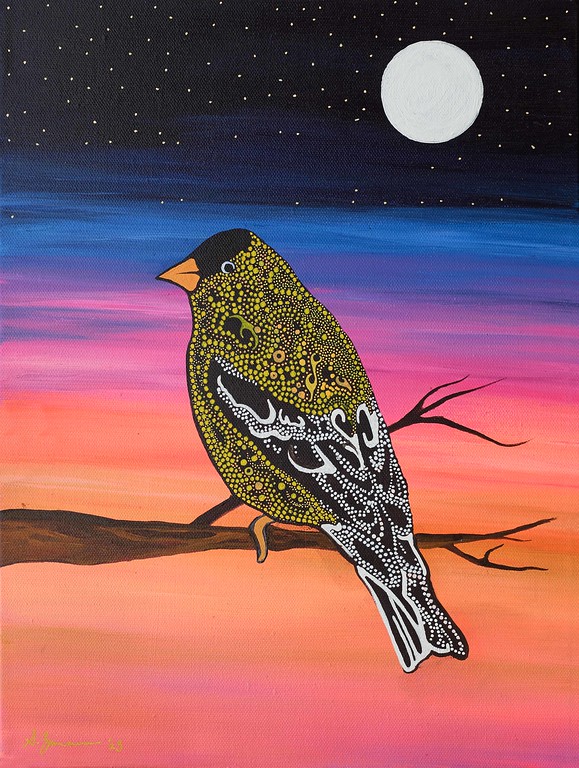
When the Electa Quinney Institute and American Indian Student Center moved into our new space in Merrill Hall, we found the space lacking in visibility of the Indigenous Presence that was now in this building. When we inquired about what could we do with the empty wall space we were told we could do as we needed to. “We should have big murals representing all the Native Nations of Wisconsin,” and with that this project was born.
Over the next few years the Electa Quinney Institute, in partnership and collaboration with the American Indian Student Center, utilizing funds from Bader Philanthropies, will be hosting a number of native artists to share their talents.
Malia Chow is a Native Hawaiian cultural practitioner, educator, artist, and community leader with decades of experience advancing Indigenous knowledge, cultural arts, wellness, and social justice. Deeply connected to Native Hawaiian, Pacific Islander, and First Nations communities throughout Wisconsin and the Midwest, Malia’s work bridges cultural preservation, mental health, environmental stewardship, and artistic expression.
Since 1996, Malia has directed and performed in hundreds of cultural presentations and performances for nonprofit organizations, educational institutions, healthcare facilities, senior communities, and cultural events. She has also shared her expertise internationally, teaching her original Hula Kahiko and Hula ʻAuana choreographies to hula instructors, directors, and practitioners in Mexico, Germany, and the Netherlands.
As the Founder and Program Director of Na Hale Cultural Arts Center, a federally recognized 501(c)(3) nonprofit organization, Malia develops programs that enrich lives through dance, music, wellness, art, and community in the spirit of aloha. In addition to her cultural work, she serves as a Community Healer with the HIR Wellness Institute, supporting Indigenous and Tribal communities through mental health and wellness programming for youth and elders.
As Artist-in-Residence with the Electa Quinney Institute, Malia leads Hula & Polynesian Culture Workshops that invite participants to engage with Hawaiian and Polynesian traditions through hula, chant, cultural teachings, and Indigenous ways of knowing. Malia will continue offering these workshops during the 2026-2027 academic year on Wednesdays from 11:30 a.m. to 1:00 p.m., beginning September 2, 2026, welcoming students, faculty, staff, and community members into a culturally rich and inclusive learning environment.

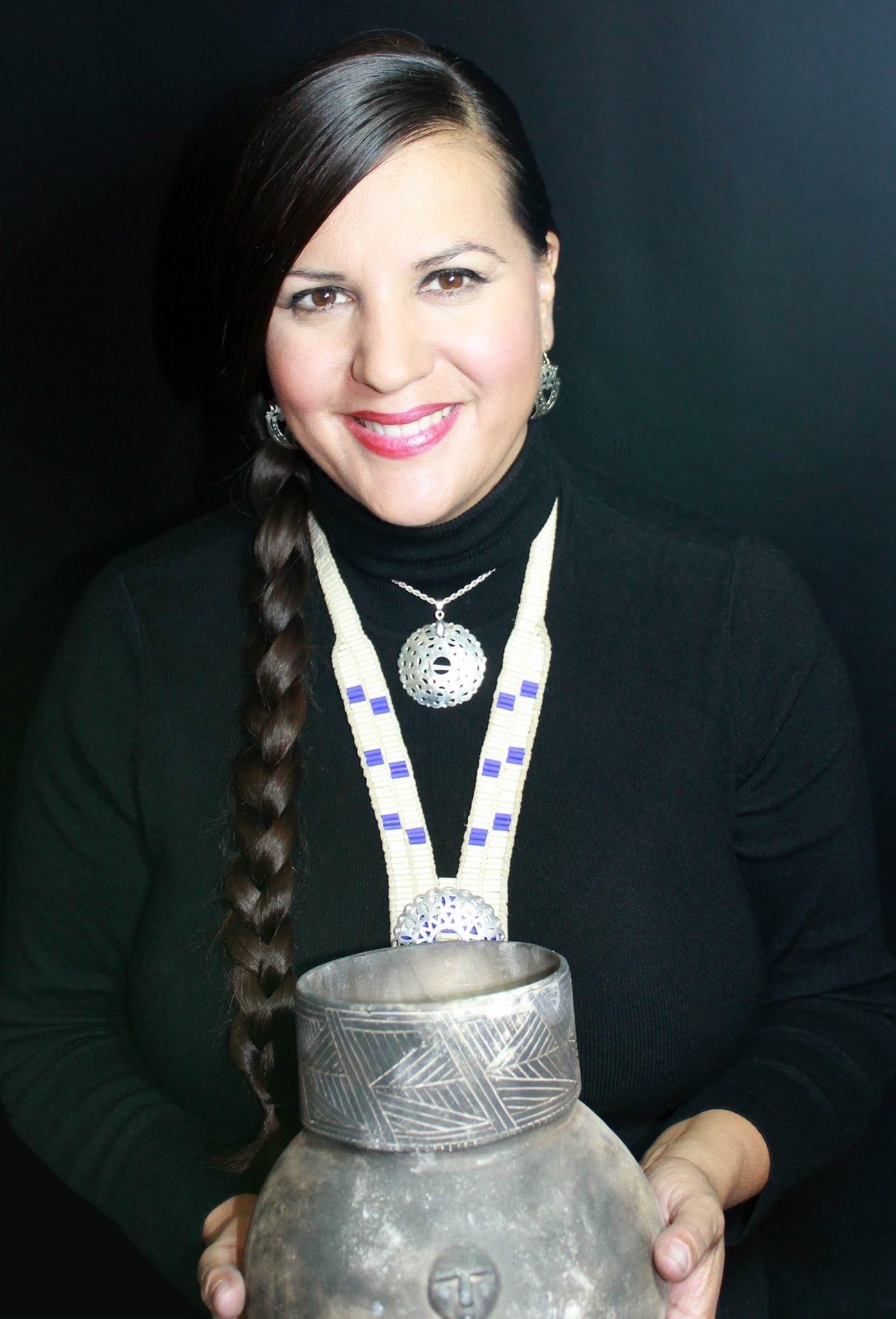
Jennifer M. Stevens is an Oneida and Lakota (Oglala, Hunkpapa, and Rosebud) artist, educator, and cultural knowledge keeper dedicated to preserving and revitalizing the traditional art of prehistoric Oneida pottery. Raised on the Oneida Reservation in De Pere, Wisconsin, Jennifer has spent more than two decades teaching Indigenous pottery-making techniques to learners of all ages through guest artist and artist-in-residence programs in schools and higher education settings. She holds a Bachelor of Arts degree from St. Norbert College and an Honorary Master’s Degree recognizing her expertise in Prehistoric Oneida Pottery.
As an Artist-in-Residence with the Electa Quinney Institute during the 2025-26 academic year, Jennifer led a two-semester, hands-on pottery program that guided students and community members through the traditional process of creating prehistoric Oneida pottery. Participants harvested and processed basswood fibers to make cordage, gathered and prepared local clay, mixed natural temper materials, and hand-built pottery using traditional techniques and designs. The experience culminated in a public firing of the completed pots, providing participants with a deeper understanding of Oneida lifeways, artistry, and cultural continuity.
Through her teaching, Jennifer not only shares technical skills but also fosters connections to Indigenous history, land-based knowledge, and cultural resilience. Her work ensures that the traditions of prehistoric Oneida pottery continue to be practiced, appreciated, and passed on to future generations.
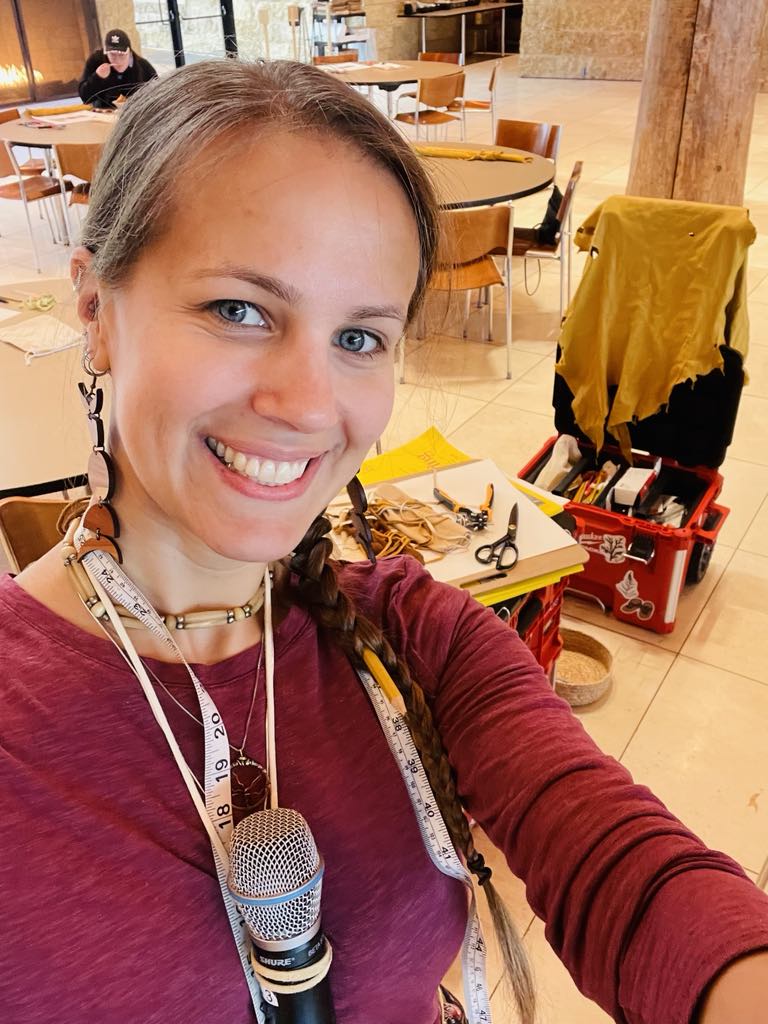
Rachel Jeske is a Certified Artisan of the Hannahville Indian Community, traditional craftsperson, and Indigenous entrepreneur dedicated to preserving and sharing Neshnabé (Potawatomi) arts and cultural traditions. Through her business, RL Neshnabé, Jeske creates traditional handmade works while educating others about Indigenous craftsmanship, historical knowledge, and the cultural significance embedded within these practices.
Although Jeske has been sewing and crafting since childhood, her journey into traditional moccasin making and Neshnabé arts began in 2013, a pivotal experience that inspired a deep commitment to learning, practicing, and teaching traditional Indigenous craftsmanship. Since then, she has become known for her work with brain-tanned deerhide moccasins, medicine pouches, and other traditional arts that connect contemporary makers to ancestral knowledge and community traditions.
Jeske’s relationship with the Electa Quinney Institute began through the annual Indigenous Felt Knowledge Festival, where she participated as both a vendor and workshop facilitator. As an Artist-in-Residence during the 2025-26 academic year, she offered a series of hands-on moccasin and medicine pouch workshops for UW-Milwaukee students and community members. Participants learned traditional techniques while gaining a deeper understanding of the cultural teachings, patience, and skill involved in Indigenous artistry. In addition to her workshops, Jeske met with Kinship & Responsibility Scholars to discuss entrepreneurship, cultural preservation, and her experiences as an Indigenous small business owner.
Through her teaching, Rachel creates spaces where traditional knowledge can be shared across generations, ensuring that Neshnabé artistic traditions remain vibrant and accessible. Her work demonstrates how Indigenous arts serve not only as creative expression, but also as powerful tools for cultural continuity, community building, and education.
Jonathan Thunder attended the Institute of American Indian Arts – Studio Arts Program in Santa Fe (1999-2000) and received a B.A. in Visual Effects and Motion Graphics from the Art Institute International in Minneapolis (2005). His epic animated mural Manifest’o was installed in the Minneapolis-St. Paul International Airport 2021 – 2023. Thunder has received numerous awards and fellowships, including the Jim Denomie Memorial Scholarship, the McKnight Foundation Fellowship, the Minnesota State Arts Board Grant, the Pollock-Krasner Foundation Grant, and the Tiwahe Foundation Leadership Grant. His work has been included in numerous one-person, two-person, and group exhibitions at All My Relations Gallery, the Duluth Art Institute, the Highpoint Center for Printmaking, the Minneapolis Institute of Art, the Muskegon Museum of Art, Rochester Art Center, and the Tweed Museum of Art. Jonathan Thunder: Good Mythology premiered on PBS American Masters in 2023.
As our Artist in Residence, Johnathan Thunder led 11 workshops with 15 students to collaboratively create a mural reflecting student identities and values in a 2-week timeframe. During EQI’s 1st Annual Indigenous Felt Knowledge Festival, Thunder completed a live painting inspired by a conversation with local elder Mark Denning and led a live drawing session with approximately 50 children and teachers from UWM’s Children’s Learning Center. Approximately 40 people, including UWM’s Chancellor, Vice Chancellor, and Provost at the time, attended the mural reveal.

Both artist and educator, Sam Zimmerman / Zhaawanoogiikhik is a direct descendant of the Grand Portage Band of Lake Superior Chippewa (Ojibwe). Drawing on ancestral connections, Sam’s art continues the Anishinaabe tradition of storytelling with themes of environmental stewardship and conservation.
His artwork is held in private collections in the United States and abroad and in public installations in the Chik Wauk Museum and Nature Center, Voyageur National Park, University of Wisconsin-Milwaukee, and the communities of Duluth and Grand Marais. He has received grant awards from the Minnesota State Arts Board, Arrowhead Regional Arts Council, Northland Foundation Maada’ooking, and Duluth Superior Community Foundation.
As Artist in Residence for 3 weeks in April, Sam Zimmerman completed 3 paintings and participated in 3 community events, including serving as keynote speaker at the Indigenous student graduation, Honor for All, reaching about 95 attendees.