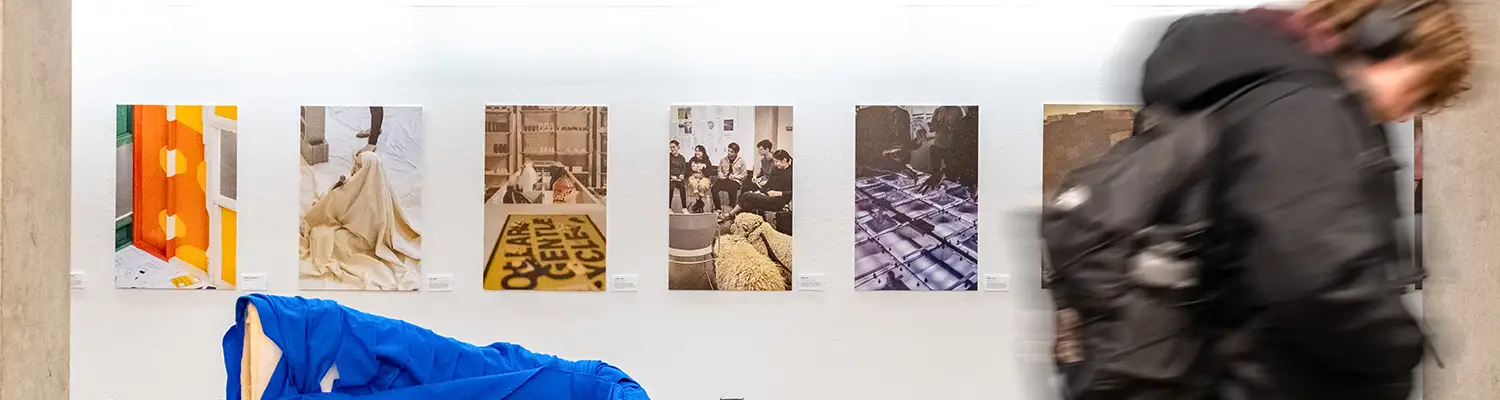
The University of Wisconsin-Milwaukee School of Architecture & Urban Planning (SARUP) offers two-year Fitzhugh Scott Fellowships in applied research specifically related to contemporary architectural practice.
Supported by the Fitzhugh Scott Fund in Design Excellence, the fellowships are geared toward focusing and expanding design research, energizing the architectural curriculum with current discourse, as well as confirming an academic career path for candidates in the formative stage of their professional lives.
Innovative and emerging designers, architecture practitioners and scholars are encouraged to conduct design research and to participate in the SARUP community through the teaching of studios and seminars.
Fitzhugh Scott Fellows
What started in 2013 as a single one-year fellow has now expanded to two overlapping two-year fellowships welcoming radically diverse pedagogy and experimental research from many faculty participants over the past decade.


Fitzhugh Scott Chair in Design Excellence




Brian Johnsen and Sebastian Schmaling
2016 Fitzhugh Scott Chair
Brian Johnsen and Sebastian Schmaling are the founding principals of Johnsen Schmaling Architects, a Milwaukee-based studio critically acclaimed for its thoughtful, context-driven contemporary architecture. The firm’s work has been widely published in books and leading design journals in the United States and abroad and has received numerous professional honors, including the Architectural League’s Emerging Voices award, 10 American Architecture Awards, and 22 National AIA Design Awards. Johnsen grew up in Chicago and holds a Master of Architecture from UWM; Schmaling, originally from Berlin, earned degrees from Harvard University, UWM, and the Technical University Berlin.
Steve Badanes
2014 Fitzhugh Scott Chair
Steve Badanes is a co-founder of Jersey Devil Design/Build, a group of architects, artists, and inventors committed to the interdependence of design and construction. Jersey Devil built all their own work, which shows a concern for craft and detail, innovative use of materials, and a strong environmental consciousness. Badanes is an Emeritus Professor at University of Washington (UW). From 1988-2024, he directed the UW Neighborhood Design/Build Studio, where students design and build small community projects for Seattle area nonprofits. In summers, from 1994-2019, he taught Community Design/Build at the Yestermorrow D/B School in Vermont.
Will Bruder
2012-2013 Fitzhugh Scott Chair
For 46 years Will Bruder has explored inventive and contextually exciting architectural solutions in response to a site’s opportunity and the user needs. His work celebrates the craft of building in a manner not typical of contemporary architecture. Through his creative use of materials and light, Will is renowned for his ability to raise the ordinary to the extraordinary. Opening his first Arizona studio in 1974, Will relocated his studio to downtown Portland, Oregon in the spring of 2019. He has led work for over 650 commissions, received prestigious national awards as well as lectured and been published all over the world. He has held visiting chairs at MIT, IIT, Yale, University of Southern California, University of Wisconsin/Milwaukie, University of Toronto, University of Virginia, Portland State University, and University of Oregon. Self-trained as an architect, Will has a Bachelor of Fine Arts degree in sculpture from the University of Wisconsin-Milwaukee. He supplemented his studio art education with further study of structural engineering, philosophy, art history and urban planning. He followed this with architectural apprenticeships under Paolo Soleri and Gunnar Birkerts. He was a Rome Prize Advanced Design Fellow at the American Academy in Rome in 1987 and was made a Fellow of the American Institute of Architects (FAIA) in 2013.
Neil Frankel
1999-2012 Fitzhugh Scott Chair
Award-winning Chicago architect and furniture designer Neil Frankel is known as a true master of clean design. A graduate of the University of Illinois architecture program, he served as Director of Interiors at Skidmore, Owings & Merrill’s Chicago office before joining the faculty of the School of Architecture and Urban Planning at UW-Milwaukee. In 1998 he and his wife, Cindy Coleman, founded their Chicago-based design firm, Frankel + Coleman. Elected to the Interior Design Hall of Fame in 1994, Frankel is celebrated for his remarkable versatility, evidenced in his designs for numerous corporate, performing arts, exhibition, education and residential spaces.
MASTERcrit
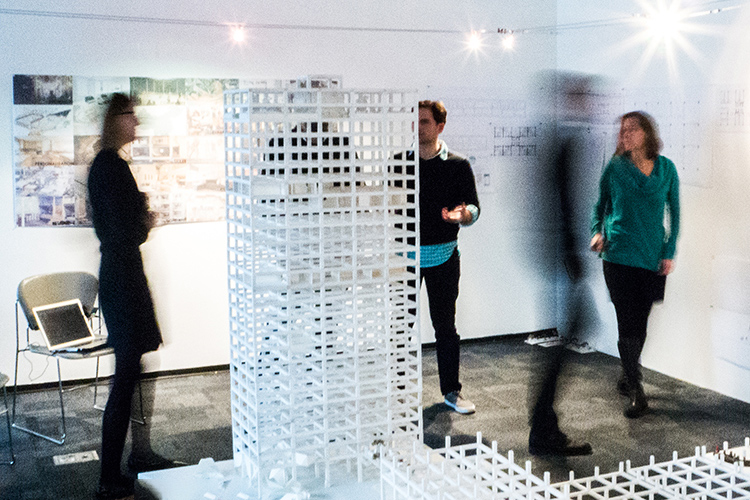
For three consecutive years, the Fitzhugh Scott Fund in Design Excellence supported MASTERcrit, an initiative that invited internationally recognized architects to work with select graduate students through lectures, design briefs, charrettes, and critiques. Visiting MASTERcritics challenged students with focused design inquiries and sustained dialogue. The MASTERcritics were:
- MOS Architects (2015)
- Andrew Zago (2016)
- Jürgen Mayer H. (2017)
The series and its outcomes are documented in MASTERcrit, a publication that captures the briefs, projects, and conversations generated through the program.