
This fall, students will return to Herstmonceux Castle in East Sussex, England, thanks to a generous grant from Bader Philanthropies. The funding supports a unique, field-based seminar led by the Historic Preservation Institute (HPI) focused on documenting the 15th-century brick structure, one of the oldest of its kind in Europe.
Through hands-on work in laser scanning, photogrammetry and Building Information Modeling (BIM), students will produce high-resolution drawings, 3D models and immersive visualizations to aid in future conservation efforts.
The course combines a two-week intensive field session in the U.K. with a semester-long studio back in Milwaukee, where students will refine data and develop final deliverables. HPI Director Matt Jarosz and Adjunct Assistant Professor Amanda Wagner will lead the seminar.
“It’s not common to get to work on a project as unique and beautiful as Herstmonceux Castle,” said Teresa Klopp, a recent Master of Architecture graduate who participated in last year’s seminar. “The collaboration between students was incredible. We all learned so much and gained vital skills that could not have been acquired without this perfect combination of location, project and people.”
Other students reflected on the lasting academic and personal impact of the experience.
“The hospitality we received at the castle was amazing,” said Felipe Paez. “Seeing the structures I had studied for so long in person was a magical moment.”
Emily Leahy added that the work sparked new research interests in the use of LiDAR and drone data to document and preserve vulnerable heritage sites.
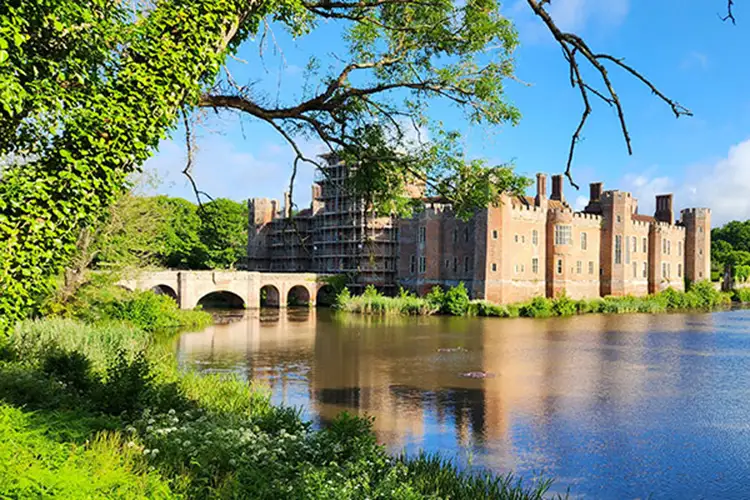
Designed as a pilot for future international field documentation courses at UWM, the seminar offers students a chance to contribute meaningfully to global preservation efforts while gaining industry-ready skills.
“The Institute plays a critical role in the preservation, restoration, and adaptive reuse of our built environment,” said Elysse Newmann, Dean of the College of the Arts & Architecture. “How we steward the world of yesterday is a strong predictor of the world of tomorrow.”
The documentation package produced this fall will be shared with Bader College and Queen’s University, ensuring the impact of this student work reaches beyond the classroom and across continents.