- schuerma@uwm.edu
- 937-681-5111
- Architecture & Urban Planning 377
- She / Her
Directory Category
Sam Schuermann
- Assistant Professor, Architecture
Education
- MArch, Rice University
- BS, Architecture, University of Cincinnati
Biography
Sam Schuermann is an Assistant Professor at the University of Wisconsin-Milwaukee School of Architecture and Urban Planning where she teaches in the core sequence and delivers option level studios and seminars. She has coordinated the Fall second year core undergraduate studio for four years and teaches Building Technology I. Her option studios and seminars focus on innovative domestic types and housing programming. During Spring 2025, Schuermann co-taught an option level studio with Marcus Prize recipient Tiantian Xu. Prior to her position as Assistant Professor, she served as the 2022-23 SARUP Architecture Fellow. Her teaching has been recognized via the ACSA 2024-25 New Faculty Teaching Award. Before joining academia, Schuermann practiced in Portland, Oregon as an architectural designer on housing, creative office, and cultural projects.
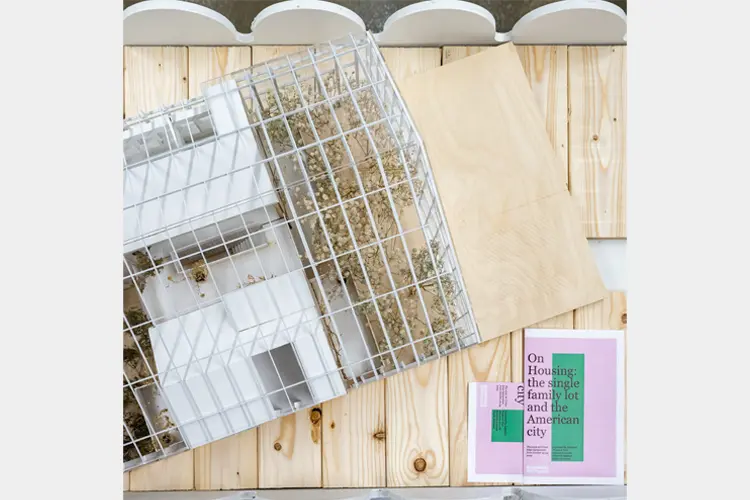
Schuermann is a designer, maker, and researcher whose work explores the objects, conventions, and material implications of domestic labor. By leveraging the aesthetics of domesticity, and working within the lineage of home economics education, Schuermann’s work questions and subverts a variety of socio-political and socio-economic constructs associated with the typical single-family home and lot. Her scholarship has been disseminated through a variety of venues including ACSA, STOA, MONU, Wisconsin Architect Magazine, and a residency at Art Omi, among others. Most recently, Schuermann received the generous '25-'26 Urban Edge funding and utilized the award to organize and host a three-day public symposium titled "On Housing: The single-family lot and the American city." More information can be found here: https://uwm.edu/architecture/urban-edge-award-at-uwm-recognizes-national-voices-on-housing-and-the-american-city/. An accompanying exhibit highlighting the work of symposium participants was open during the Fall 2025 semester. A collaborative edited volume documenting and expanding upon this symposium and exhibition is forthcoming.
Recent & Selected Works