
- lucking@uwm.edu
- Architecture & Urban Planning 283
- She / Her
Directory Category
Maura Lucking
- Assistant Professor, Architecture
Education
- PhD, University of California, Los Angeles
- MA, School of the Art Institute of Chicago
- BA, Boston College
Biography
Maura Lucking is a historian of architectural modernism and American empire. Her research situates design at the nexus of connected histories of race, craft, land, labor, and domination, largely in the late nineteenth-century United States and its territories. This research often addresses the twinned phenomena of racial capitalism and settler colonialism in a transcultural and comparative frame, considering the built environment both as evidentiary of larger social and political processes but also as a potent interface between cultures and ideologies.
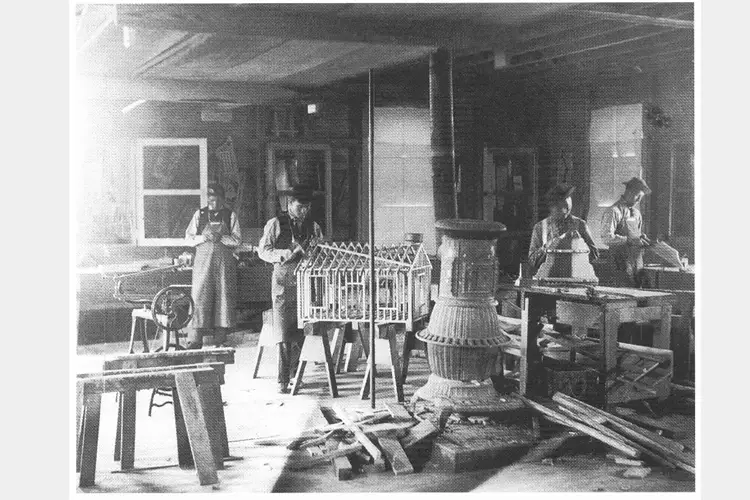
Her forthcoming book, Settler Campus: Building Trades Education and the Blueprint for American Empire, provides an architectural history of the U.S. public college movement from the well-known Land Grant colleges to Black industrial institutes and Indian boarding schools. In it, she studies the interest of government policymakers and an emerging donor class in land use, campus planning, and building trades pedagogy at schools founded after the U.S. Civil War, arguing that design practices were used to model new social and labor hierarchies with immediate impacts on Black and Native land holdings, economic prospects and architectural lifeways. This argument is grounded in the material culture and practices of the classroom—from the emergence of hands-on ‘learning by doing’ and manual labor requirements for white students as an abolitionist sentiment to its migration to mechanical drawing, carpentry, and architecture courses for the newest subjects of American empire spanning geographies from the American South to West Africa. These pedagogies were received in multivalent ways, occasionally aligning with separatist movements or self-determination efforts on the ground while their representation through demonstrations, exhibitions, photography, publication, and fundraising campaigns operationalized the building toolkit of settler colonialism—single-family homesteads, timber framing, and small-scale farming—as a blueprint for managing colonized populations under the guise of assimilation and development.
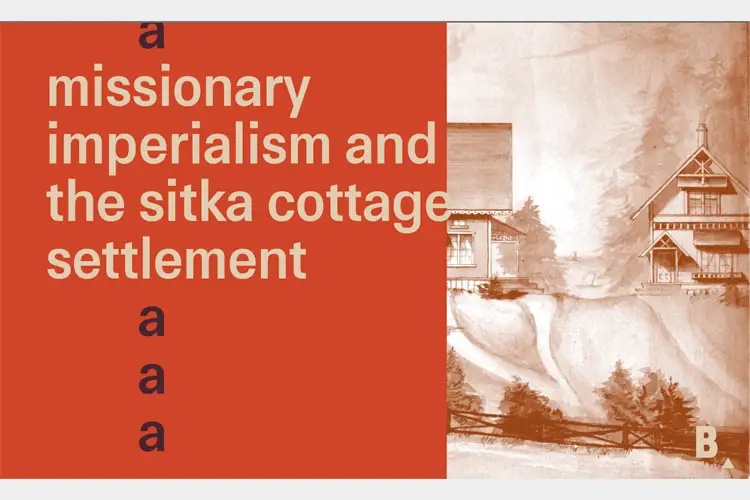
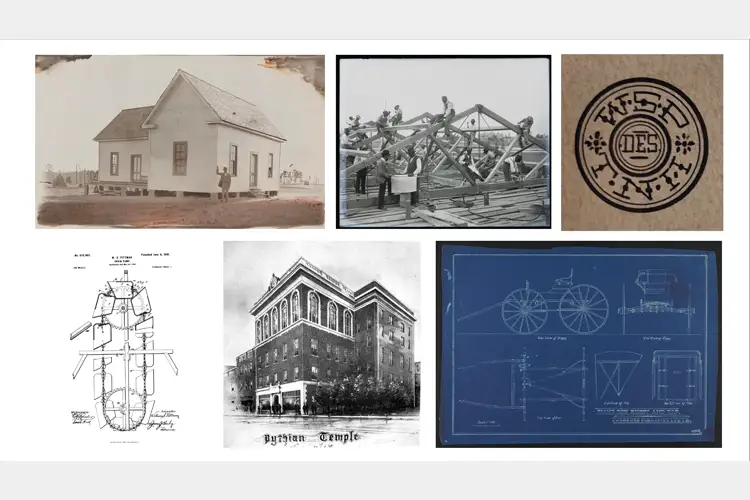
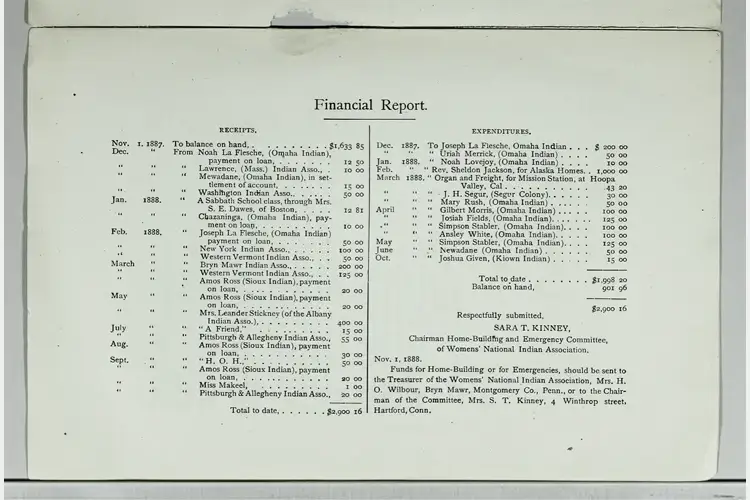
Another interest is in media histories of architectural representation with a focus on bureaucratic and technical documents of architectural production and their role in broader histories of capitalism. This has included mechanical drawing and blueprinting, construction photography, and mortgage and loan documents. New research considers the entanglement of state, missionary, and philanthropic approaches to housing and homebuilding projects in Indian country with sites in Native Alaskan, Omaha, Oneida, and Anishinaabe homelands. She works with design students as researchers and in upper-level courses on methods for architectural visualization of difficult, hidden, or erased histories of the built environment using archival documents.
This work has been supported by Dumbarton Oaks, the Graham Foundation, the Getty Research Institute, the Huntington Library, the Society for Architectural Historians, and the Winterthur Museum. She was previously the inaugural Buell Postdoctoral Fellow at the Buell Center for the Study of American Architecture and the Society of Fellows/Heyman Center for the Humanities at Columbia University. In 2024, she was the recipient of the Brownlee Dissertation Award, awarded annually by the Society of Architectural Historians to celebrate the most outstanding dissertation in architectural history.
Recent & Selected Works

Articles & Selected Papers
- Lucking, Maura. “Dispossession and the Model Cottage: Violent Homemaking and Disciplinary Debt in the Allotment Era.” Architectural Theory Review 28:3 Architectures of Informal Empire (2024).
- Lucking, Maura. “Self-Suggestion in the Tuskegee Machine: Technical Drawing Under Jim Crow.” Grey Room 87 (2022).
- Lucking, Maura and Anna Goodman. “Images Doing Work: Construction Photography at the Tuskegee Institute and Black Mountain College.” Journal of Architectural Education 73:2 (2019).
Artistic Exhibitions & Artwork
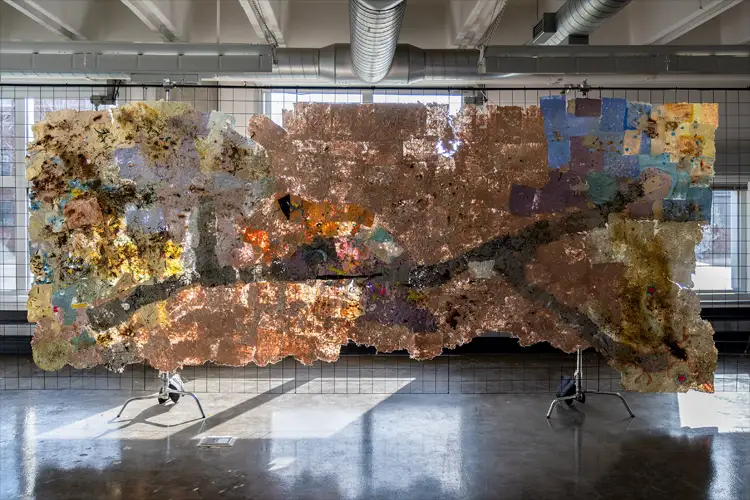
“Claim Lands + Land Plans: Representing Contested Visions of Onʌyota’a:ká Place” Papermaking Workshop and Exhibition of Primary Documents and Cartographic Models, Jim Shields Gallery, UWM (2024).
Awards
David B. Brownlee Dissertation Award, Society of Architectural Historians (2024)
Books
Lucking, Maura and François Perrin, Eds. Architectones: Art in the Living Environment (SPA, 2015).
Chapters
- Lucking, Maura. “The Apple of Discord in Amherst: Free Labor, Sectionalism, and Anglo-Assimilation in Olmsted’s Agricultural Colleges,” Rewriting the American Present. Charles Davis II, Kathryn Holliday, and Joanna Merwood-Salisbury, eds (University of Texas Press, 2026).
- Lucking, Maura. “Prentice Women’s Hospital and Maternity Center Architectural and Planning Systems Table” in Architecture Itself and Other Postmodernist Myths. Sylvia Lavin, ed. (Spector Books, 2020).