- This event has passed.
Center for Equity Practice & Planning Justice Open House and Symposium
April 8 | 11:30 am – 2:00 pm

Date & Time
Wednesday, April 8, 2026 (11:30 a.m.-2:00 p.m.)
In recognition of National Fair Housing Month — commemorating the landmark Fair Housing Act of April 11, 1968 — we invite you to be part of the solution. The Center for Equity Practice and Planning Justice (CEPPJ) within UWM’s School of Architecture & Urban Planning, in partnership with the Milwaukee Community Land Trust, is hosting a transformative Open House and Symposium dedicated to shaping Milwaukee’s future as a justice-oriented city.
Milwaukee stands at a pivotal crossroads. As one of the most segregated cities in the United States, Milwaukee faces a deepening affordable housing crisis that threatens the stability of thousands of families, particularly in communities of color. The affordable housing crisis is not simply a housing problem. It is a justice problem.
Housing Justice for Milwaukee: Community Land Trusts, Equity Strategies, and the Path to a Justice-Oriented City is not merely a conversation about housing. It is a conversation about power, community self-determination, and who gets to call Milwaukee home. Join scholars, practitioners, city leaders, community advocates, and neighbors as we explore proven, scalable, and durable strategies to make affordable housing a lasting reality for Milwaukee’s most vulnerable residents.

Schedule
Wednesday, April 8
| Time | Description | Location |
|---|---|---|
| 11:30 a.m.-12:30 p.m. | Lunch & Networking | AUP 126 |
| 11:30 a.m.-12:30 p.m. | CEPPJ Open House | AUP 225 |
| 12:30-12:45 p.m. | Welcome & Opening Remarks | Marcus Commons |
| 12:45-1:30 p.m. | Panel Discussion | Marcus Commons |
| 1:30-1:45 p.m. | Q & A | Marcus Commons |
| 1:45 pm.-2:00 p.m. | Closing Remarks | Marcus Commons |
Panel Discussion
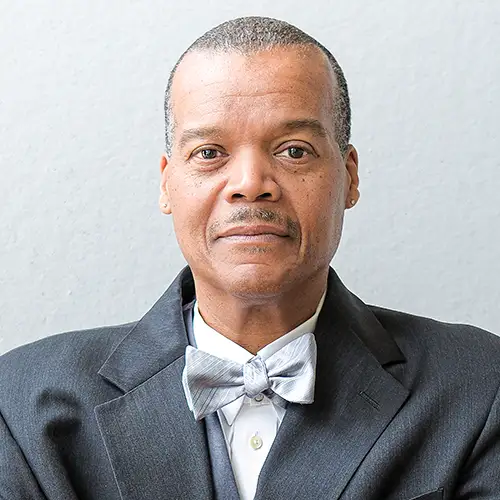



Ian Bautista
Senior Director of Civic Engagement
Greater Milwaukee Foundation
Ian B. Bautista is Senior Director of Civic Engagement at the Greater Milwaukee Foundation, where he leads initiatives that advance community change, public policy engagement, and racial equity across the Milwaukee region. A seasoned nonprofit and community development leader, Bautista brings more than two decades of experience working at the local and national levels to strengthen communities and expand opportunity.
Prior to joining the Foundation in 2020, Bautista served as Executive Director of the Clarke Square Neighborhood Initiative, a collaborative effort on Milwaukee’s South Side focused on implementing a neighborhood Quality of Life Plan. Earlier in his career, he served as President of the United Neighborhood Centers of America, a national network of community-based organizations that later merged into what is now Social Current, and he also served as President & CEO of El Centro, Inc. in Kansas City, Kansas.
A native of Kansas City, Kansas, Bautista holds an MBA from Rockhurst University and a Master of Regional and Community Planning, along with bachelor’s degrees in Political Science and Spanish, from Kansas State University. He lives in Whitefish Bay, Wisconsin with his family and remains active in civic leadership and community service.
Erika Sanders
President and CEO
Metropolitan Milwaukee Fair Housing Council
Erika Sanders is President and CEO of the Metropolitan Milwaukee Fair Housing Council (MMFHC), Wisconsin’s only full-service private fair housing enforcement agency. She has been with MMFHC since 1998, and has played multiple roles within the organization. Over the last 28 years, she has provided direct services to victims of illegal housing discrimination, created and implemented education and outreach campaigns on numerous specialized fair housing topics, and conducted training for owners and managers of rental housing. Ms. Sanders holds degrees from Oberlin College and the University of Wisconsin – Madison.
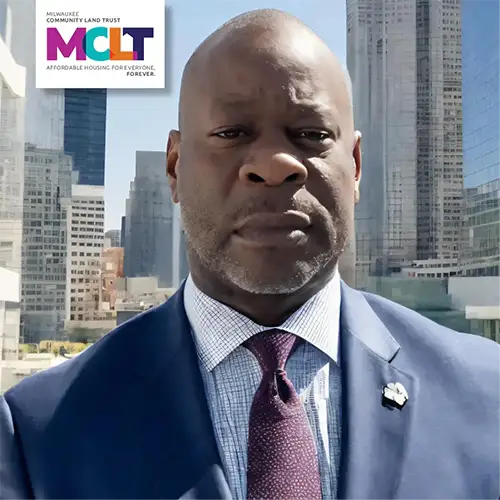
Lamont Davis
Executive Director
Milwaukee Community Land Trust
Lamont Davis is Executive Director of the Milwaukee Community Land Trust (MCLT), where he leads efforts to expand permanently affordable homeownership and advance community-driven solutions to the housing affordability crisis. His work focuses on creating pathways to homeownership for families historically excluded from traditional housing markets, while ensuring affordability is preserved for future generations.
Lamont has helped grow MCLT into a trusted community-based housing organization, working in partnership with local governments, financial institutions, philanthropic organizations, and neighborhood stakeholders. He has led initiatives to acquire, rehabilitate, and steward homes in historically disinvested neighborhoods, with a focus on stabilizing communities, preventing displacement, and building long-term community wealth.
His leadership is informed by practical experience in residential construction and housing development, allowing him to connect policy, development, and stewardship into a cohesive strategy for sustainable impact. Lamont is a recognized advocate for the Community Land Trust model and frequently speaks on topics including closing the racial homeownership gap, permanently affordable housing, community wealth building, and equitable neighborhood development.
He is committed to advancing housing as a foundation for economic stability, dignity, and opportunity, and brings both technical expertise and lived community perspective to his work and public speaking.
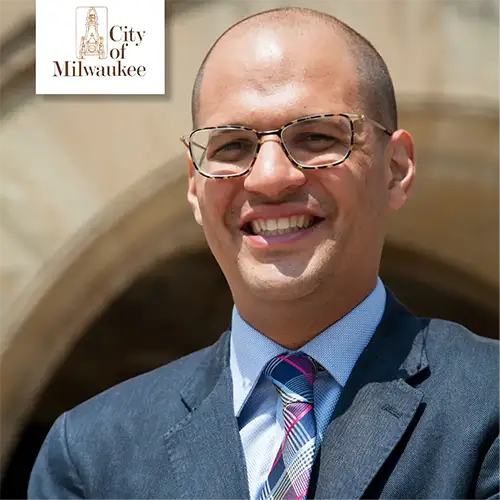
Sam Leichtling
Deputy Commissioner
Department of City Development
Sam Leichtling is the Deputy Commissioner for the City of Milwaukee’s Department of City Development. Sam has worked for the City of Milwaukee since 2008 and has held leadership roles in DCD’s Housing and Planning Divisions including formerly serving as City Planning Director. He holds master’s degrees in Urban Planning and Public Administration from the University of Wisconsin-Milwaukee and a bachelor’s degree from Carleton College. Sam is a member of the American Institute of Certified Planners (AICP) and a certified Housing Development Finance Professional (HDFP).
Teig Whalen-Smith
Executive Director
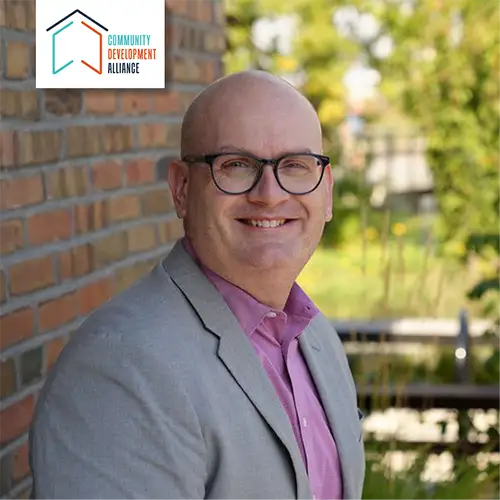
Community Development Alliance
Teig’s passion is building and leading collaborative teams to make Milwaukee the best place on planet earth. He believes that for Milwaukee to achieve its full potential, there needs to be a focus on the people and neighborhoods that have been left out of the larger social, political, and economic systems. Teig was raised and continues to live in the Sherman Park neighborhood and is a proud Milwaukee Public Schools alumni and parent.
In 2022, Teig was named the Chief Alliance Executive for the Community Development Alliance (CDA). CDA is an affiliation of community development funders and practitioner in the Milwaukee Area that led Milwaukee’s first Collective Affordable Housing Plan, with the goal of advancing racial equity by providing a quality affordable home for every Milwaukeean. Since the plan has been implemented, CDA has supported over 300 new and rehabbed homes, 3,000 new homeowners, and raised more than $40 million to support Black & Latino homeownership.
Prior to joining CDA, Teig served as the chief operating officer of Milwaukee County where he managed a $1.2 billion annual budget, serving one million residents. Teig supported the expansion of mental health services, the elimination of chronic homelessness, and was a core member of the leadership team that was the first municipality in the country to declare racism as a public health crisis and develop a strategic plan to combat racism. Teig also served as the Economic Development Director of Milwaukee County and led the efforts to develop more than $1 billion in the former Park East corridor, including Fiserv Forum. In his private sector career, Teig led a community economic development firm that developed $60 million of affordable housing and main street development.
Latasha Henley
Homeowner of Land Trust property
Latasha Henley’s journey to homeownership is a story of resilience, determination, and hope. A college graduate in the medical field and a dedicated Patient Health Advocate in the nephrology department, Latasha has always been committed to helping others live healthier lives. Outside of work, she enjoys caring for her family, assisting seniors in her community, and spending time with her beloved grandchildren.
Latasha began pursuing homeownership in 2010, but her path was unexpectedly challenged in 2014 when she suffered a stroke that left her disabled. Rather than giving up on her dream, she found the strength to start again. She worked tirelessly to rebuild her finances, improve her credit, and strengthen her financial knowledge.
In 2025, with the support of the Community Land Trust, Latasha’s years of perseverance paid off when she officially became a homeowner. Today, her three-bedroom home and spacious backyard provide a safe, joyful place where she can create memories with her grandchildren and continue building a brighter future for her family.
Latasha’s story is a powerful reminder that with determination, support, and opportunity, dreams of homeownership can become reality.
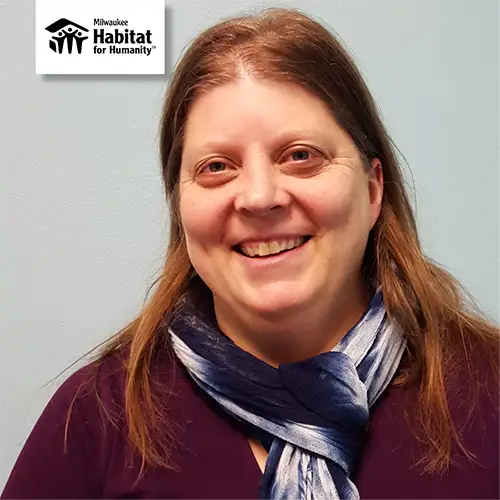
Beth Van Gorp
Director of Advocacy and Government Relations
Milwaukee Habitat for Humanity
Since 2015, Beth Van Gorp has been part of the Milwaukee Habitat for Humanity team and is currently the Director of Advocacy and Government Relations, which is a new position for the organization. Milwaukee Habitat for Humanity is in the midst of plans to successfully double production of new homes for homeownership and critical home repairs by 2028. Beth’s professional experience includes over 20 years with Habitat for Humanity of Charlotte, NC. Her roles with Habitat have included volunteer coordination, accounting, safety, AmeriCorps, and grants management. A native of Iowa, she is a graduate of the University of Tulsa.
Symposium Focus Areas
- Affordable Housing Development: Innovative approaches to expanding the supply of permanently affordable homes in Milwaukee neighborhoods.
- Community Land Trust Strategies: How the CLT model legally separates land from housing to achieve generational affordability, with CLT foreclosure rates 6x lower than the national average.
- Community Stability & Anti-Displacement: Tools and policies that protect legacy residents from the pressures of gentrification and speculative market forces.
- Community Self-Determination: Governance models that keep decision-making power about land and housing in the hands of residents and communities — not absentee investors.
- Scalability & Policy Innovation: Pathways to grow and replicate successful affordable housing models city-wide and regionally.
- Milwaukee’s Justice-Oriented City Framework: How affordable housing strategies align with Milwaukee’s broader equity, inclusion, and social justice agenda.
Registration
Join Us in Shaping Milwaukee’s Future
This event is free and open to the public. All are welcome: students, educators, practitioners, policy makers, residents, advocates, and community members committed to housing justice in Milwaukee. Space is limited. Please register by Tuesday, March 31, 2026.
Questions? Contact Maria Holman: holmanmw@uwm.edu