- This event has passed.
Counter-Stories of Architectural Education and Racial Capitalism—A Conversation Between Maura Lucking and Jodi Melamed
March 19 | 12:30 pm – 1:30 pm
Date & Time
March 19, 2026 (12:30-1:30 p.m.)
Maura Lucking is a historian of architectural modernism and the nineteenth century U.S. Her research studies design as the intersection of connected histories of race, craft, land, and labor.
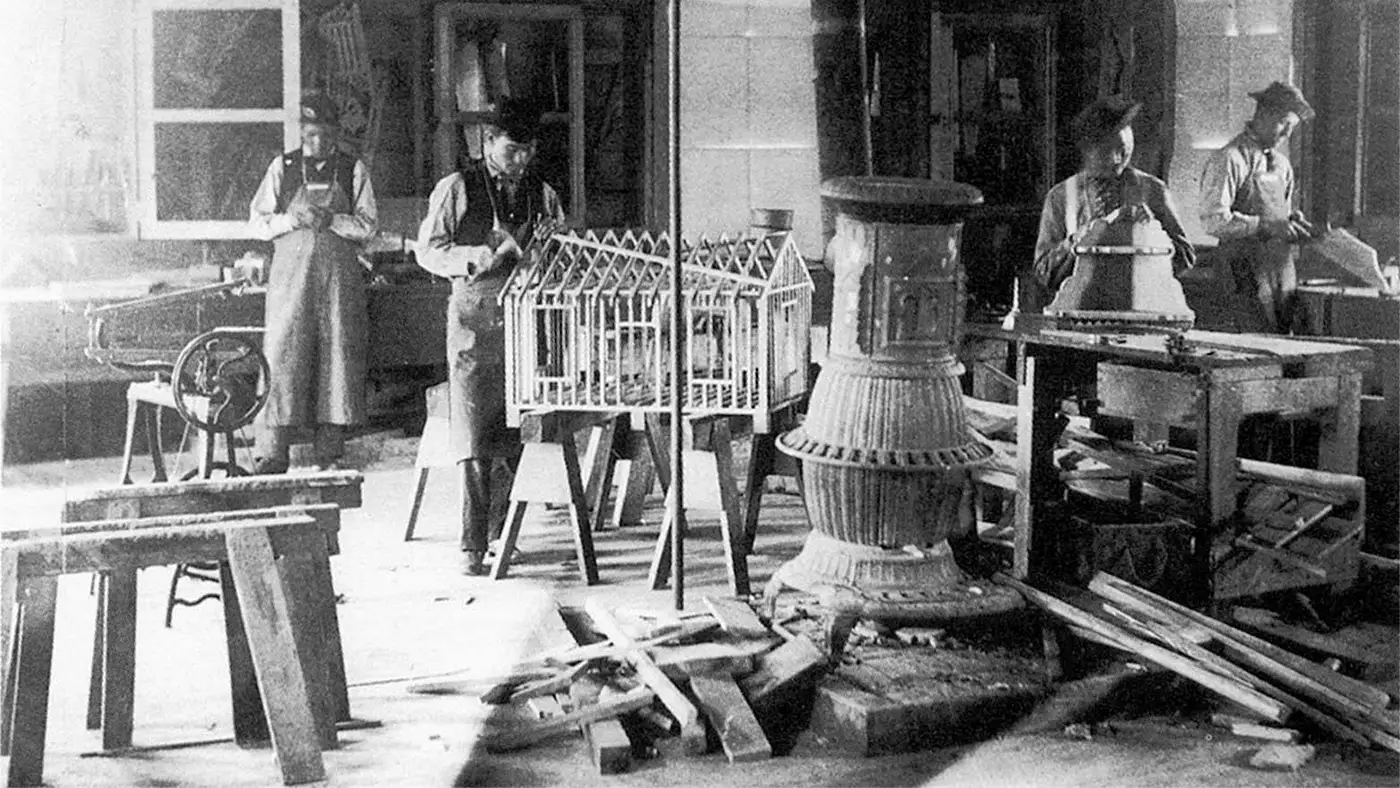
Her forthcoming book, Settler Campus: Design, Free Labor, and Land Reform in American Education, provides an architectural history of the Land Grant college movement. In it, she studies the relationship between government policy, land use, campus planning, and design pedagogy at schools founded after the U.S. Civil War, considering the role of design practices in Black and Native dispossession as well as the construction of new racial identities and settler colonial hierarchies.
Another interest is in sociotechnical and media histories of architectural representation, including mechanical drawing & blueprinting, architectural photography, and mortgage and loan documents. New research considers state, missionary, and philanthropic approaches to housing and homebuilding projects in Indian country.
This scholarly work has been supported by the Winterthur Museum, Huntington Library, Graham Foundation, Society for Architectural Historians, and the Getty Research Institute and has appeared in Architectural Theory Review, Faktur, Grey Room, the Getty Research Journal, the Journal of Architectural Education, and Thresholds. She was the recipient of the 2024 Brownlee Dissertation Award, given by the Society of Architectural Historians to celebrate the most outstanding dissertation for that year in architectural history.
Jodi Melamed is professor of English and Race, Ethnic, and Indigenous Studies at Marquette University. For spring semester 2024 she served as the Norman Freehling Professor at the Institute for the Humanities at the University of Michigan.
She is the author of Represent and Destroy: Rationalizing Violence in the New Racial Capitalism (Minnesota UP, 2011), co-editor of Economies of Dispossession: Indigeneity, Race, Capitalism (with Jodi A. Byrd, Alyosha Goldstein, and Chandan Reddy), a special issue of the journal Social Text. Her influential essay, “Racial Capitalism,” is among the most cited articles in the journal Critical Ethnic Studies. She has published widely on relational approaches to critical race and ethnic studies and gendered racial capitalism in widely cited essays including “Predatory Value: Economies of Dispossession and Disturbed Relationalities” (with Jodi A. Byrd, Alyosha Goldstein, and Chandan Reddy), “The Spirit of Neoliberalism: From Racial liberalism to neoliberal multiculturalism,” “Using Liberal Rights to Enforce Racial Capitalism” (with Chandan Reddy) and “ Don’t Arrest Me, Arrest the Police: Policing as the Street Administration of Colonial Racial Capitalism” (with Lisa Cacho).
Her current book project, Operationalizing Racial Capitalism: From its Command Powers to its Undoing (with Chandan Reddy) is under contract with Verso Books. For today’s liberatory movements, it seeks to provide an understanding of how liberalism writ large functions as racial capitalist world-making praxis. Melamed and Reddy examine liberalism writ large not as a philosophy of freedom or just order, but as theory and practice of command. They examine liberalism’s key praxis-concepts – nation-state, (capitalist) law, property, security, citizenship and more – as nodal points for command apparatuses that are key to colonial racial capitalist operability. The intention of their operational account is not to make racial capitalism seem implacable, but to show that its doings are always threatened by protocols for making, continuing, and defending specific, grounded living (Black, Indigenous, migrant and more). By refusing killability and authorizing mutual survival, such “other doings” evade and break state-capital violence circuits. Though pushed below or outside of ‘politics’ , as conventionally understood, such doings together are powerful, transformative forces.