Bryce Bray
Global Studies – Security track
My name is Bryce Bray. I completed the Global Studies Security track in 2012, focusing on environmental and food security. Basically environmental services such as water provisioning, soil building, and food supplies like fish stocks, make food production livelihoods and thus food security possible.
This focus took me to the Chilean countryside where I finished the security track by interning at a sustainable agriculture site. Afterwards, I started to work as a freelancer, translating from Spanish, German, and Portuguese to English while traveling through most of Spanish-speaking Latin America.
A year of working as a translator on the move convinced me to enroll in the Translation MA at UW-Milwaukee. I took advantage of the degree’s online nature to spend a year in Brazil and bolster my Portuguese skills and see most of the country including the Amazon and Pantanal before winning a Foreign Language and Area Studies Fellowship for Portuguese and Brazil.
For the MA’s internship, I spent some five months in Mexico working as an interpreter for a microfinance organization. The experience of driving into the countryside and speaking with people about their challenges and dreams sort of shook me. I knew I liked doing that much more than staring at a computer all day. It also mattered to me that the work dealt with sustainable development, not random instruction manuals to be translated into English. That time in Mexico was maybe the happiest, so far, in my life, as it allowed me to keep researching the areas I mentioned earlier by traveling to coastal towns and mountain villages to learn about how communities manage their natural resources. In my free time I completed a Virtual Foreign Service internship with the Department of State. It dealt with environmental policy and deforestation.
This might make me sound like a wandering academic, but I felt the need to get back into my original interest after working with the Department of State and my personal research in Mexico. So, with little hesitation, I applied for and received a decent scholarship to enroll in an MA in International Environmental Policy at the Middlebury Institute of International Studies at Monterey.
While traveling, I had begun to teach myself Russian to keep things lively. This allowed me to specialize in Russian at the Institute and complete an immersion program in Irkutsk near Lake Baikal. My experience there showed me that the waxing and waning of towns along the coast of the Lake were tied to how its resources were managed. It was a socioecological system. We all live in such systems, and very little of the planet has not been modified in some way by humans.
This understanding led to my Boren Fellowship to conduct research on climate-fragility issues in Mozambique. The Boren Fellowship is oriented toward security studies, so it really allowed me to combine my different areas of knowledge. I spent a year in Mozambique examining how climate change could affect the country’s stability. What I mean by this is that climate change, by increasing the likelihood of higher temperatures, flooding, unpredictable rainfall, and giant cyclones (like Idai and Kenneth which struck within weeks of one another), food production can be devastated, prices for bread go up, and people get very angry and instability can result. This is not inevitable, but the more fragile a country is in the first place, -how popular it’s government is, how (in)competent that government is, existing poverty indicators- can determine what may happen. It is incredibly similar to what we are seeing with Covid-19 and countries around the world. Those with well-prepared safety nets are doing much better than those without.
This climate-fragility nexus seems to be my specialization now. It is fascinating, because it encompasses many disciplines, including security, migration, climate science, natural resource management, and development, to name a handful. Apparently, others agree with me, as I recently received the Fulbright to keep working on this topic in Senegal. There I will help the country augment its 3S (sustainability, stability and security) Initiative which recognizes that sustainably managing soils and forests gives people a reason to stay, not migrate to urban ghettos, attempt a dangerous journey to Europe or join radical organizations.
My work will help them design a marine 3S project to help revive the country’s coastal livelihoods which have also seen a mass exodus like that of the agricultural sector. Unfortunately, marine components are often ignored even though they employ a large part of coastal States’ populations and provide the majority of their protein intake.
Helping countries develop sustainably and deal with climate change is an investment in our own security and far more effective than the trillions poured into anti-terror campaigns.
Advice for students? Learn languages and use your free time to travel, not just for fun, but to research your interests. A different type of work gets done when you’re engaged for the sake of your own interest, not to fulfill a job or class requirement.
Matthew Vogt
Global Studies – Sustainability Track (BA), 2018
My name is Matthew Vogt and I am currently in my last semester in the Global Studies Degree at UWM. I am planning on pursuing my internship requirements for the degree program this summer at Clear Sky Farms in British Columbia, Canada. It is a large sustainable holistic monastery style farm where I will learn methods of running a sustainable business as well as peace building and mediation strategies. I am very grateful to be able to fund this opportunity through the Global Studies Internship Award! After I complete my internship and graduate with my double major of Global Studies (Sustainability Track) and Japanese, I plan on continuing my education at UWM and pursue the Master’s of Sustainable Peacebuilding program.

Ella Syth Ivens- Global Communications
Internship site: UPEACE Centre for Executive Education
Location: San Jose, Costa Rica
Virtual Intern
How has this experience shaped your ideas about what’s next and your future career? What this experience has really shown me is that I might want to go into international marketing and management. I have always known I wanted to do something with a global impact, and this internship has just solidified that. However, it also has pushed me to realize that I enjoy the business and logistical side of organizations. Before my internship, I wasn’t sure if I wanted to add a business minor, and now, since I’ve been working, I have officially declared a business minor! I feel that this experience has pushed me a lot, as my boss has always been very encouraging of me trying all of the parts that come with working in social media and marketing. He has taught me photo editing, how to create a website, how to boost engagement, how to create posts, how to analyze what went well and what we need to push more of, and so many other things. All of that can get brought into a future career, even if it isn’t in social media. I went into my internship saying I wanted to learn as much as I could and try everything, and my boss has allowed me to do that and more, really allowing me to learn so much about what I enjoy and might want to pursue.
Tell us about your internship. How long have you been interning, what is the job like and what are you learning? I started my internship back in September of 2024 with a three-month contract. I liked working for them, and they liked my work, and so that contract has gotten extended, and I am still working there today! What my position entails is planning a monthly social media post calendar, creating those posts, and then scheduling them. Along with that, I collect the data from our content, organize documents, and adjust our webpages. A workweek in this internship is quite relaxing, as it is only 15 hours a week with the ability to work ahead and take a week off if you are busy with classes or have a trip planned. The staff I have worked with truly care about your well-being and are extremely supportive while pushing you to grow and learn more. When I started my internship, my job was to simply create the content that my boss planned and schedule it with the captions he had already created. As I touched on above, I have learned a lot more and now have many more tasks added to my plate that have taught me a lot about working in social media.
Why did you choose a virtual internship? I chose a virtual internship for a few reasons. The fall semester before my internship, I completed my study abroad, however I only went for a single semester, so I wasn’t able to do an internship there. Because I had gone overseas already and wanted to be able to stay at UWM campus and finish my degree, it made sense to not do an in-person exchange internship. Why I chose virtual over in-person in Milwaukee is because I enjoy having a very flexible schedule and the ability to travel and still get my work done. I live in Milwaukee, but I take weekend trips to visit my family decently often and virtually allowed me to continue doing that which was important to me.
What are the main advantages and challenges of a virtual internship? The main advantage of a virtual internship is that you are able to move around. I do my work in coffee shops, at my home, on vacation, etc. There are many challenges that you might not face in an in-person internship to be aware of. The first is that you need to have good communication skills to create close connections. It can be very difficult to connect on a personal level when you are communicating through email, Zoom, or text. It can also be a challenge to not be in person if your company has a strong on-site group. In my case, I work for a university in Costa Rica where most of the people I work with are on-site. This can make it harder to get connected, as you can’t just walk to their office and instead have to email and wait to get caught up. Despite the challenges with virtual communication, the team I work with has been very good, and we have figured out the best ways that work for us. These are things to keep in mind when looking at a virtual internship.
What do you like the most about your internship? I have loved being able to see my own growth through this internship. I went in knowing the basics of creating social media content, but I have since learned so much more. I have used information I learned in class and also was already aware of topics from working that some classes then covered. I am also very proud to say that I am working at the UPEACE Centre for Executive Education. I think that is one of the best parts of my internship. I was made aware of an organization I knew nothing of and now feel such a strong connection to the job. When I see courses go well and read the testimonials or see the photos from events, it is very enjoyable to then be able to be a part of it.
What advice would you give to your fellow students considering the virtual route for their internship experience? I have two pieces of advice that have been extremely important for me to learn. The first is to be as personable as you can be. Communication and connection through virtual internships can be hard, so it is important to put in the work at the start to come across as who you want to be. Second, utilize a calendar if you don’t already. Being virtual, there can sometimes be a feeling that you don’t have as much to do because you aren’t in an office. For that, it is very important to stay on top of your work, make sure all your notes are written down, and plan your time accordingly.
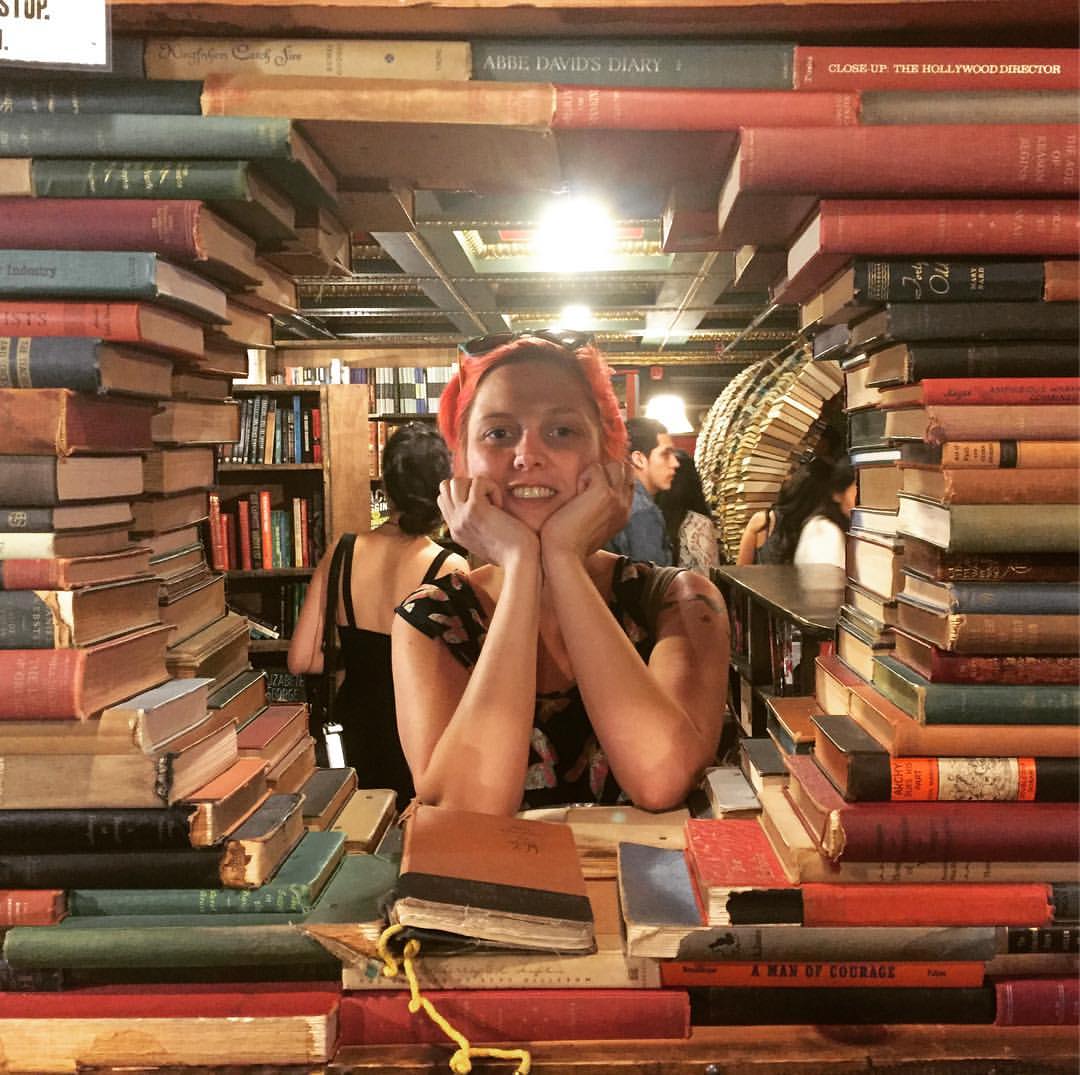
Alex Knudtson
Italian and Global Studies-Security
After earning her Master’s degree in Human Rights and Multi-Level Governance from the Università degli Studi di Padova, Italy, Alex is now working as case manager of Interventional Cardiology and Hemodynamics at the Department of Cardiac, Thoracic, Vascular Sciences, and Public Health at the University of Padova. Alex’s thesis was titled “Refugee Mental Health: A New Indicator for States to Achieve The Sustainable Development Goals.” Alex also interned while a graduate student with NOVE Onlus, working with refugees in Italy.