
Have you ever wondered why we get a flu vaccine every year? Let’s explore viral vaccinations, how they work, and why we need the flu vaccine annually.
Viruses and Vaccines
Viruses are infectious agents that lack cellular structure and consist of genetic material encased in a protein shell (1). They cannot replicate independently, and they must invade living host cells, where interactions either destroy the cell or establish long-term persistence.
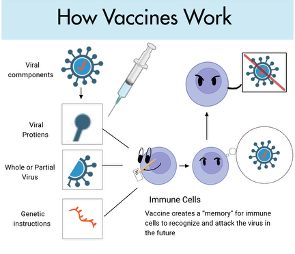
Immunizations work by training the immune system to recognize harmful agents without causing illness. There are a variety of ways we can do this using different types of vaccines. Some vaccines incorporate entire deactivated or weakened pathogens, whereas others use only selected components that identify the virus to trigger a targeted defense. Traditional vaccines deliver a direct piece of the virus itself (like a dead virus or a single protein). Newer vaccines, provide genetic instructions that tell your own cells to produce the viral protein on their own (2,3). Technology for vaccination has progressed a lot but the principal remains the same.
Flu Virus Annual Changes
The flu is a respiratory disease caused by a virus. Over time as the virus cycles, small genetic errors accumulate and alter surface projections that tell your immune system what the virus is, a process called antigenic drift, producing yearly variants (4). These ongoing structural changes allow the virus to evade preexisting immunity from past infections or immunizations (4).
Flu Vaccine: How It Works and Why I Need It Every Year
The Center of Disease Control (CDC) recommends a yearly flu vaccine for everyone six months and older (5). Studies of healthy young adults have shown the influenza vaccine to be effective in preventing influenza (5). However, vaccines typically protect for only a few months, and the continuous antigenic drift of influenza viruses makes last year’s flu vaccine ineffective for this season (4). The vaccine is updated annually because antigenic drift causes changes in seasonal flu viruses each year (6). To continue protection, the flu vaccine is recommended every year. Check out the SHAW website to learn about a free flu vaccine! For more information visit Flu Shot Clinics – Student Health and Wellness Center
All the best,
Asymina (She/Her)
Peer Health Educator
Works Cited
- “Vaccines.” ASM.org.
- “Vaccine Types.” NIAID: National Institute of Allergy and Infectious Diseases.
- Chaudhary, N., Weissman, D. & Whitehead, K.A. mRNA vaccines for infectious diseases: principles, delivery and clinical translation. Nat Rev Drug Discov 20, 817–838 (2021). https://doi.org/10.1038/s41573-021-00283-5
- “The Pathology of Influenza Virus Infections.” PMC.
- Hay, A.J., Gregory, V., Douglas, A.R., and Lin, Y.P. “The evolution of human influenza viruses.” Philosophical Transactions of the Royal Society of London. Series B, Biological Sciences, vol. 356, 2001, pp. 1861–70. doi: 10.1098/rstb.2001.0999.
- “Influenza Vaccines.” NIAID: National Institute of Allergy and Infectious Diseases.