Lea Denny
Founder, Chief Executive Officer, and Senior Clinical Strategist of HIR Wellness Institute
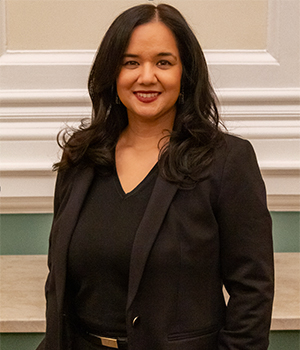
Lea S. Denny, MS, LPC, NCC, NMT, is a nationally recognized mental health strategist and systems innovator. She is the founder, chief executive officer and senior clinical strategist of HIR Wellness Institute — an award-winning, survivor-led nonprofit redefining what accessibility, culturally grounded and relationally centered mental health care looks like for Indigenous and underserved communities. Denny is a survivor of childhood trauma and violence. She transformed her experiences into a catalyst for systemic change. Through that, she created one of the most innovative and community-rooted mental health models in the country. She credits her family, team, community, Elders and ancestors for their guidance and unwavering encouragement throughout the challenges of launching a nonprofit focused on healing survivors and society’s most vulnerable.
With over 25 years of experience in the mental health field, Denny is a proud alumna of the University of Wisconsin-Milwaukee, where she earned her bachelor’s degree in psychology, and Mount Mary University, where she completed her master’s in clinical mental health counseling. Originally planning to pursue a PhD focused on advancing culturally responsive mental health practices for Indigenous and underserved communities, her path shifted after an encounter with a Native Elder. Upon completing a survey, he looked at her with sincerity and said, “Thank you — for doing something with this (research).” His words struck me deeply. It was not a request — it was a responsibility: a call to translate research into practice and data into action. Recognizing that research often takes an average of 17 years to reach communities, Denny chose action over waiting. Guided by her intuition and the support of her husband, she set aside her personal goal of earning a PhD to turn her research into direct, meaningful impact. She committed to co-creating healing spaces with the people, not simply for the field.
In 2017, Denny declined multiple doctoral and professional opportunities to launch HIR Wellness Institute, a nonprofit dedicated to providing free mental health and wellness services for Indigenous and underserved survivors of violence. With no major funders, a modest office furnished with donations and a small team of volunteers, she began building a survivor-centered space that reflected her vision of culturally grounded, trauma-informed care. This initiative marked the beginning of her journey in transforming research, experience and community needs into actionable, life-changing services.
In just eight years, Denny has grown HIR Wellness Institute from serving a handful of survivors to reaching over 6,000 individuals annually. Today, the organization provides mobile mental health clinics, individual and group counseling, advocacy, outreach in service deserts and community-based healing programs in areas long abandoned by traditional mental health systems. Under her leadership, HIR has secured more than $8 million in funding, developed a shared leadership model, built an integrated and interdisciplinary team of culturally grounded providers and emerged as a national model for trauma-informed care, crisis response and community-activated healing.
A visionary in workforce development, Denny has trained and mentored over 100 emerging mental health clinicians — cultivating a generation of providers prepared to deliver care beyond the walls of traditional in-office therapy and reach service desert areas to address the mental health service gap. In 2017, she founded HIR’s annual CAM & Red Sands Gathering, which convenes hundreds for collective grief work and to address complex losses surrounding Missing & Murdered Indigenous Women & Relatives. Denny has also developed over 20 transformative mental health programs, including the Community Activated Medicine (CAM) Framework and Mobile Mental Health Without Borders approach. These models are intended to scale nationally and internationally to equip providers to deliver trauma-responsive care in real time, directly within the communities that need it most.
Her leadership extends globally. Denny has been invited to keynote and present in the United States, Canada, Australia and South Africa, speaking on historical and intergenerational trauma, Indigenous mental health equity, decolonizing practice and her groundbreaking framework for understanding social harm, Persistent Toxic Systems & Environments (PTSE).
Denny’s advocacy spans research, policy and government systems. She has served on a subcommittee for the Wisconsin State Task Force on Missing & Murdered Indigenous Women and was recently appointed by Attorney General Josh Kaul to the Wisconsin State Task Force on Human Trafficking. She also leads an Indigenous girls’ empowerment program that, in the summer of 2025, brought over 40 youth and their families to the United Nations Headquarters, where her delegation attended the Nelson Rolihlahla Mandela Prize Ceremony inside the General Assembly Hall. In recognition of this and other initiatives, HIR Wellness Institute has received numerous proclamations honoring its work with Indigenous youth and community mental health, including a declaration by Mayor Cavalier Johnson establishing July 14 as Daughters of Tradition Day in Milwaukee.
Denny’s leadership has earned widespread recognition, including the 2025 Purple Ribbon Award from the City of Milwaukee; the 2025 Medical College of Wisconsin President’s Community Engagement Award; the 2024 National Association of Social Workers, Wisconsin Public Service Award; and the City of Milwaukee Healing & Wellness Award.
Today, Denny is advancing a national movement to reimagine mental health care — not as a privilege, but as a human right delivered in the languages, cultures and communities of the people who need it most. She is building a future in which mental health is mobile, barrier-free, survivor-centered and culturally rooted.
Her work is guided by a simple truth: When healing reaches the most underserved, we don’t just change lives — we transform generations and reclaim the future of entire communities.