Hypothes.is is a social annotation tool that integrates directly with a Canvas course, allowing for grade passback from the tool to your gradebook. As instructors increasingly look for new ways to engage students meaningfully with course readings and materials, Hypothes.is can be a helpful tool for creating community and generating discussion around course materials.
Why Hypothes.is?
Hypothes.is enables instructors and students to collaboratively annotate web pages, PDFs, and other digital documents directly in the browser. This shared annotation process encourages active reading, critical thinking, and meaningful discussions among students, which has the potential of reducing reliance on AI-generated discussion responses.
Moving Away from AI-Generated Discussions
Hypothes.is has the potential to shift student engagement away from AI-generated discussion posts toward more authentic and personalized interactions. Annotations require students to demonstrate direct engagement with the text, making AI-generated content possible but less feasible.
Strategies for Using Hypothes.is in Teaching
- Guided Reading and Annotation Prompts
- Provide students with specific annotation prompts to guide their reading, prompting them to highlight and comment on key arguments, confusing passages, or connections to course concepts.
- Collaborative Knowledge Building
- Encourage students to reply to each other’s annotations to build collective understanding. This interactive layer promotes peer learning and deeper engagement with the reading material.
- Discussion Preparation
- Use Hypothes.is annotations as a starting point for in-class discussions or online forums. Students’ annotations serve as authentic evidence of their engagement, providing insights into their individual thought processes.
- Real-Time Feedback and Assessment
- Hypothes.is annotations provide instructors with immediate insight into student comprehension and engagement, allowing for timely feedback and intervention.
Implementing Hypothes.is Effectively
- Clearly outline annotation expectations in your syllabus. For example: Hypothes.is is a social annotation tool that allows you to highlight, comment, and annotate reading materials directly on the page. Your classmates will be able to interact and see your annotations, which makes your contributions important to the assignment. Each week, you will make 3 annotations on the reading that is selected. Your 3 annotations should include: 1 question you have, 1 connection you can make to prior readings or class materials, and 1 response to another classmate’s annotation.
- Demonstrate annotation techniques and model effective annotations to show students what is expected of them. For more examples please see: Hypothesis – Examples of Classroom Use
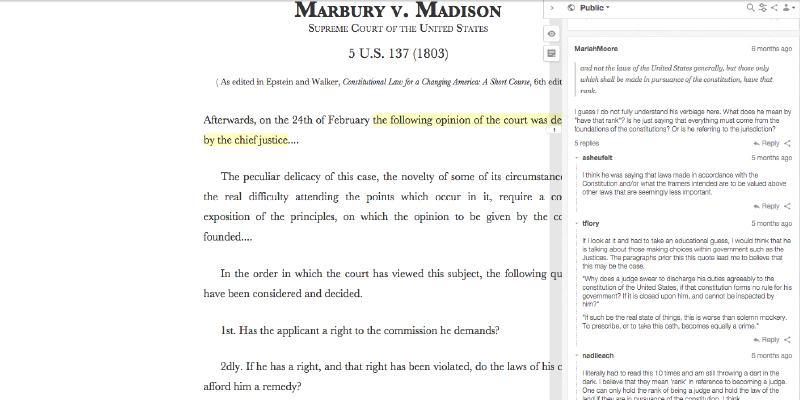
- Regularly review and integrate student annotations into your teaching practice to show their value and relevance. For example, each week, students will highlight, annotate, comment, and discuss the reading(s) you have added to Canvas with the Hypothes.is integration. Skim the annotations and comments for understanding and alter aspects of your lecture or in-class activities to go over concepts and ideas from the readings that students are having trouble understanding.
Benefits for Students
There are numerous benefits to students and their learning through the use of social annotations tools like Hypothes.is including that it:
- Promotes critical and analytical reading skills.
- Engages students with OER content, in-person or online. This UWM case study provides data and strategies used in the UWM pilot use of Hypothes.is including impact and positive student responses.
- Enhances engagement with course content.
- Fosters meaningful collaboration and community building.
How can I get Hypothesis in My Course?
Please submit a support request: CASL Support Form. CETL staff will review your request and reach out for further details.