Native American art can turn up in surprising places, including the British Museum in London. “A lot of our items ended up in Europe, and they’re not sure what it is,” explained Mark Freeland, director of UWM’s Electa Quinney Institute (EQI) for American Indian Education. “We’ll be working with those museums to extend knowledge and re-patriate items to places like the Ojibwe Museum & Cultural Center located in the Lac du Flambeau reservation.”
In March of 2024, UWM anthropology graduate student Cheyenne Morning Dove Reel ’20 and Assistant Professor Sharity Bassett, associate director of EQI, traveled to the UK with a team from EQI to study Native American porcupine quillwork at the British Museum and three others. Cheyenne considered the trip a once-in-a-lifetime opportunity to broaden her experiences and extend her research at the same time.
Being recognized as a researcher can be a monumental moment for an indigenous student. “Rarely are Indigenous and other peoples of color provided opportunities to enter research spaces as researchers,” Mark said. “Research trips can help students construct themselves out of the stereotypes imposed on them. At EQI, we are helping facilitate our students into research spaces so they can direct research to help meet the needs of their own communities.”
Travel opportunities are just one of the ways the EQI team helps UWM’s indigenous students grow. Programming can also assist students in making sense of their world.
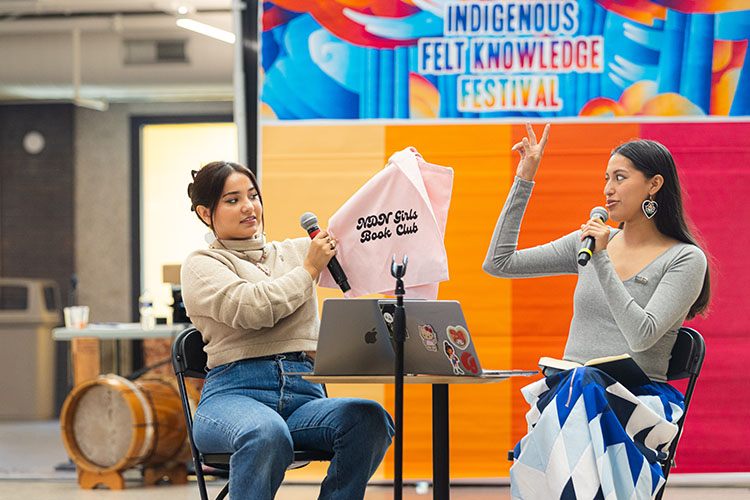
The Indigenous Felt Knowledge Festival, held in the fall and sponsored by EQI, provides the entire UWM community with an opportunity to taste Native food, listen to singing and drumming, participate in dance, watch artists paint and even make their own art with porcupine quills.
“Historically, education has been used as a weapon against indigenous people, and that has made many afraid to send their kids to college,” Mark said. “Our job is to provide a place of love, where students can come and be taken care of, loved and listened to on a deep level.”
Gifts of any size can broaden the impact of EQI, foster success among indigenous students at UWM and expand everyone’s understanding of Native American cultures. “Our dream is to support our students financially, culturally and emotionally. Our needs are many, and we still have a lot of work to do. Sharity and I are very thankful to be here. UWM is a good place.”