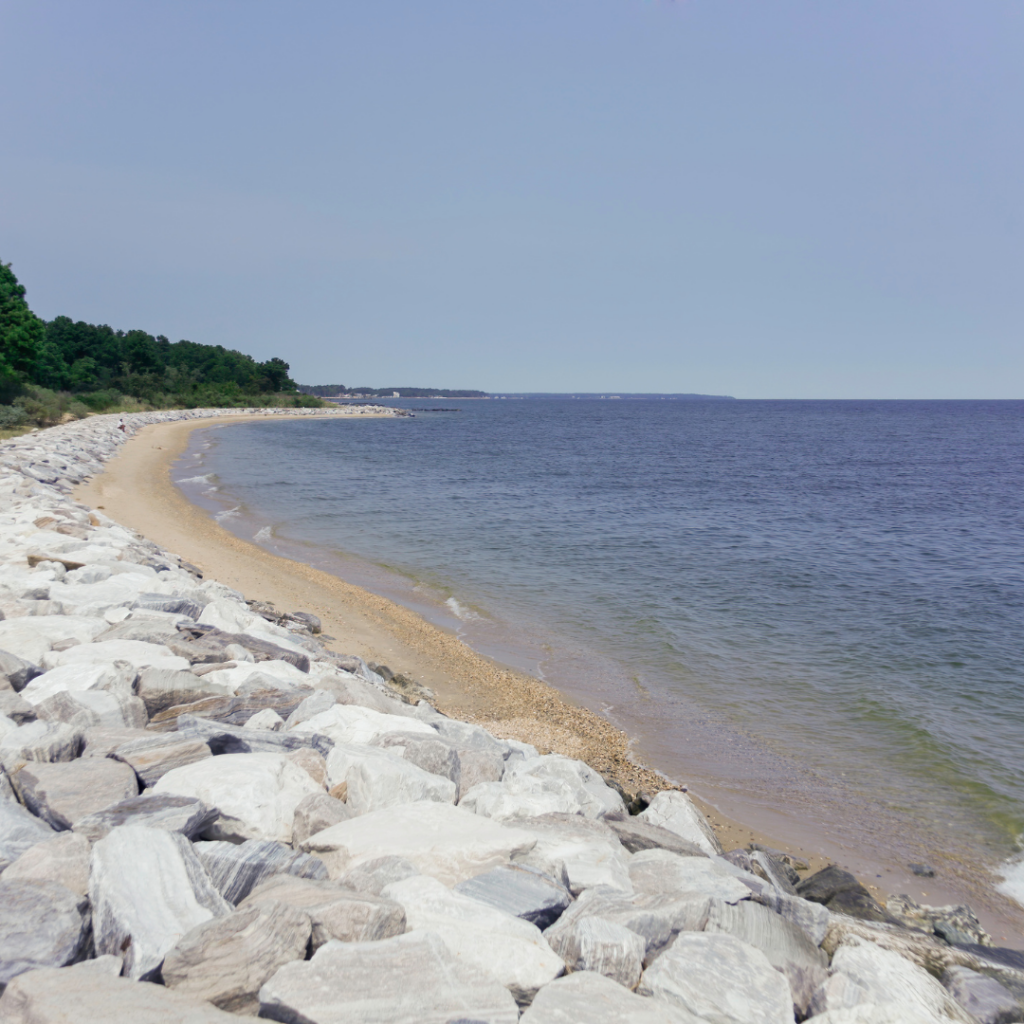
Shorelines and beaches are rapidly shifting and eroding as climate change causes ocean levels to rise and Great Lakes water levels to wildly fluctuate. But the most common responses to this erosion, specifically hard shoreline armoring and beach nourishment, raise serious concerns regarding access to public trust resources.
In the Center for Water Policy’s latest research, Water Policy Specialist Emma Ehrlich (2024-2025), Interim Assistant Director Cora Sutherland (2024-2025), and Director Melissa Scanlan investigate the legal protections for public access along the oceans and Great Lakes. This published academic research sheds light on the legal gaps in climate-disrupted shoreline management and highlights the need for Great Lakes states to learn from exemplar states to better protect public access to our beaches.
Quick Facts: What you need to know
- Shoreline armoring can physically restrict public access and diminish our sandy beaches.
- Government-funded beach nourishment often sparks debate over whether public funds are disproportionately benefiting private homeowners.
- Legal gaps exist where courts’ interpretations of public access requirements reveal significant deficiencies and a lack of protective policies across different regions.
Read the research published by Denver Water Law Review.
Emma Ehrlich, Cora Sutherland and Melissa Scanlan, Open to the Public: Legal Protections for Public Access to Shifting Ocean and Great Lakes Shorelines, 29 U. Denv. Water L. Rev. 47 (2026).