
Fill out this form to learn more about UWM.
Make a Difference with Urban Planning
At UW-Milwaukee, our urban planning students improve neighborhoods and shape communities for generations to come. This professional, practical degree prepares students for successful careers in nonprofit organizations, public planning agencies and private practices.
Whether you’re helping transform asphalt playgrounds into greener spaces or researching bicycle and pedestrian safety, you’ll create waves of positive change while earning your degree. You’ll also learn from faculty who are directly involved in local community planning and contribute to research that changes lives.
I’m doing a coordinated master’s degree and I knew coming into UWM that I was interested in architecture, but urban planning surprised me — it’s all about the human experience, not just the building itself. And the co-chair of the urban planning department has truly been a mentor and helped me realize that I can integrate both professions.

Architecture, MArch
Program Options
Urban planners respond to the needs of communities and help make cities more livable. They develop long-term plans for land use, plan safer roads and infrastructure, advocate for sustainable policies and more. UWM’s Master of Urban Planning (MUP) degree consists of a minimum of 48 credits and is a great option for anyone who wants to create positive change in built environments.
Features of the MUP program include:
- Students can earn their degree in two years.
- The program is fully accredited by the Planning Accreditation Board (PAB).
- The GRE is not required. There’s also no specific undergraduate degree required for admission.
- Scholarships, fellowships and other financial aid are available.
Courses cover topics such as land use planning, data analysis methods and urban development theory. Students choose electives and workshops to refine their career focus. They graduate prepared for careers in public planning agencies, nonprofit organizations and in private practice.
The Master of Urban Design (MUD) program consists of a minimum of 30 credits and can be completed in 12 months. It is an approved field of study within the U.S. government’s official STEM fields list. The GRE is not required for MUD applicants. Prospective students should have an undergraduate degree in architecture, landscape architecture, design-focused urban planning or interior design.
The MUD program gives students the skills needed to plan infrastructure, address environmental concerns through design and prepare design guidelines for public agencies. It’s an ideal option for students interested in the designed urban environment, but who want to focus more on strategic planning and community engagement.
UW-Milwaukee offers several coordinated degree programs in cooperation with other academic departments. That means you can pursue a Master of Urban Planning and a second master’s degree in a related subject simultaneously. It’s a great way to customize your degree path to meet your career goals. Options include:
- Master of Public Administration + Master of Urban Planning
- Master of Architecture + Master of Urban Planning
- Master of Science in Civil Engineering + Master of Urban Planning
Urban Planning Undergraduate Certificate: Explore the field of urban planning with a 15-credit certificate in urban planning that can be added to any undergraduate degree at UWM.
Preparing for a Master’s Degree in Urban Planning: Urban planning is an interdisciplinary field of study. That means no specific undergraduate major is required to prepare you for graduate studies in urban planning. Some common undergraduate backgrounds include architecture, geography, political science, engineering, urban studies, business and communication.
For students without an undergraduate degree, we offer an option to earn a bachelor’s degree in urban studies and a master’s degree in urban planning through an accelerated program. Normally, it takes about six years to receive a bachelor’s degree and a master’s degree. Our accelerated program gives students the ability to complete both degrees in five years, saving on cost and time. This path is ideal for undergraduate students who are passionate about creating better communities and know that a master’s degree is an essential part of reaching their career goals.
Program Highlights
Assistantships and Fellowships
Many graduate students are eligible for fellowships, assistantships and other awards. Teaching, research and project assistantships include full tuition remission, annual stipend and state health coverage through the university.
Curriculum Focused on Impact
Make a difference from the start through the Center for Equity Practice and Planning Justice, which addresses zoning reform and transportation among other issues affecting marginalized communities. Or be part of the Community Design Solutions center and tackle urban design problems facing Wisconsin.
Professional Connections
You’ll learn from and work alongside urban planning faculty who are experts in their fields. They’re committed to providing valuable career mentorship and connections to students.
Build Your Career
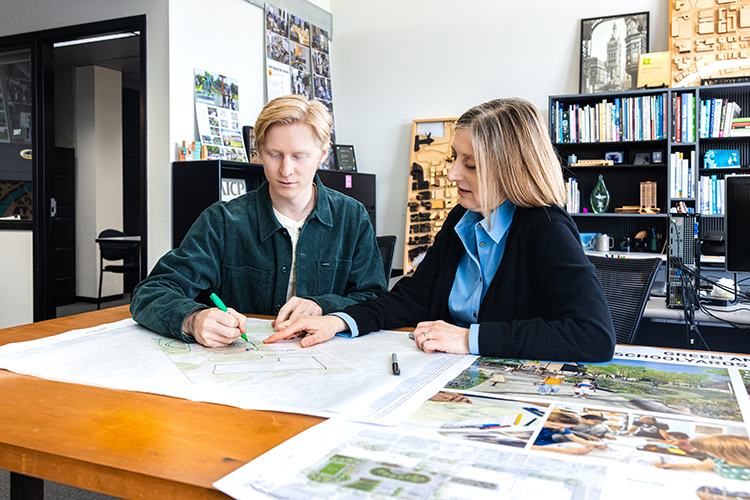
The School of Architecture & Urban Planning provides opportunities for students to gain practical experience working on real planning issues. Students and faculty have worked together on hundreds of projects with big results. Students are also regularly connected to paid internships throughout the region, such as:
- Milwaukee Healthy Neighborhoods Initiative
- Milwaukee Department of City Development and Milwaukee Department of Public Works
- Suburban planning offices
- Consulting firms and nonprofit organizations
- Wisconsin Department of Natural Resources
- U.S. Department of Housing and Urban Development (HUD)
- Southeastern Wisconsin Regional Planning Commission

Make Waves in Your World
UW-Milwaukee students come from all walks of life. What unites them is a willingness to ask big questions and a determination to find the answers. Many work side-by-side with expert faculty on research tackling the world’s toughest challenges. Others collaborate on art that helps us better understand ourselves or partner with community organizations on projects that improve lives.
Here, we turn ideas into ripples of change that create waves of positive impact. Join the next wave.

Explore New Directions
Scholarships available! Learn more about how UWM can help you achieve your academic, professional and personal goals.