
Fill out this form to learn more about UWM
Change Lives in Public Health
At the UW-Milwaukee Zilber College of Public Health, our students learn real-world skills and work with people right in their communities. Maybe you’ll help people build healthier eating habits with a nutrition degree. Or research the root causes of disease in public health and epidemiology. Or improve health outcomes using data and information systems.
Here, you’ll build an impactful career while making a difference in people’s lives. You’ll also learn from expert faculty and have opportunities to do research at Wisconsin’s only accredited school of public health.


Find Your Dream Public Health Career
Are you interested in health care but don’t like blood? Do you want to improve health for people and communities in a growing field? Explore the options below and see which public health career path is right for you.

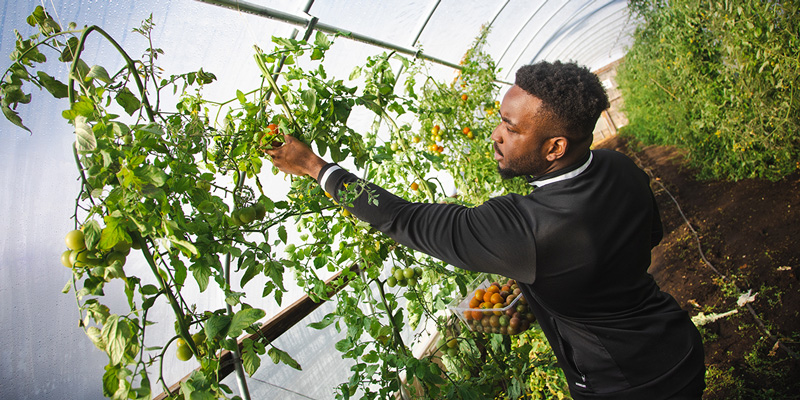
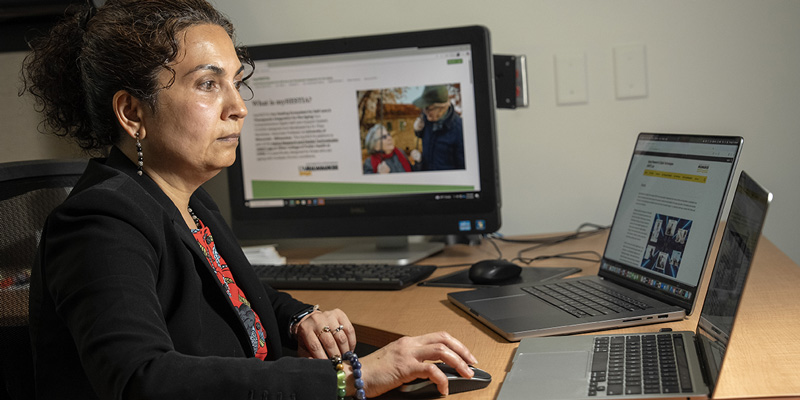

Public Health & Epidemiology
A degree in public health or epidemiology prepares you to protect and improve the health of whole communities. You’ll use data, science and outreach to prevent illness and improve quality of life.
After graduation, you’ll be ready to:
- Track and prevent disease outbreaks by analyzing data and identifying risk factors.
- Develop and implement health policies or programs that promote wellness in communities.
- Conduct research to understand health trends, evaluate treatments and support medical decisions.
- Educate communities and advocate for healthier environments, addressing issues like nutrition, environmental health and health equity.
Our graduates find work as epidemiologists, public health specialists, case managers and more. Plus, in public health, you’ll discover excellent opportunities for career growth! For example, the median annual salary for an epidemiologist is $83,980 — and jobs are projected to grow 16% from 2024 to 2034, according to the U.S. Bureau of Labor Statistics.
Nutrition & Dietetics
UW–Milwaukee’s programs in nutrition and dietetics combine science, public health and real-world experience to prepare you for a meaningful career in food, health and wellness. You’ll learn to apply the science of nutrition to improve human health and prevent disease.
Our nutritional sciences bachelor’s graduates are ready to enter the workforce in roles such as:
- Nutrition Educator
- Health or Wellness Coach
- Public Health Nutrition Specialist
- Food Service Manager
- Food Industry Consultant
- Community Outreach Coordinator
If you’re pursuing an advanced degree, our MPH in Nutrition and Dietetics deepens your clinical and public health expertise. This program prepares you to be a registered dietitian nutritionist (RDN) and work in hospitals, outpatient clinics, public health agencies, government, academia and beyond.
According to the U.S. Bureau of Labor Statistics, the median annual salary for dietitians and nutritionists is $73,850, and employment is projected to grow 6% from 2024 to 2034, faster than the average for all occupations.
Health Care Informatics
With a degree in health care informatics, you’ll be ready to combine health care, technology and data to improve medical systems and support patient care. Professionals in this field manage electronic health records and help health care teams make informed decisions while keeping patient information safe and organized.
After graduation, you’ll be equipped to find work at:
- Hospitals and Health Systems – Managing electronic health records, improving workflows for patient data and supporting clinical decision-making.
- Government and Public Health Agencies – Tracking disease outbreaks, analyzing population health trends and supporting health policy decisions.
- Research Institutions and Universities – Conducting studies on health outcomes, informatics methods or clinical data analytics.
- Pharmaceutical and Biotech Companies – Using data to support clinical trials, regulatory reporting and drug safety monitoring.
Our graduates work as informatics specialists, quality assurance specialists and health care specialists, among other roles. And they’re prepared to succeed in a growing field: The median annual salary for informatics specialists is $67,310, with jobs projected to grow 15% from 2024 to 2034, according to the U.S. Bureau of Labor Statistics.
Biostatistics
A degree in biostatistics prepares you for a career that blends statistics, health and data science. You’ll learn to apply statistical methods to public health and medical data to tackle research questions and improve health.
Our biostatistics graduates find work in:
- Hospitals and Health Systems — Analyzing patient and population data to improve outcomes.
- Pharmaceutical and Biotech Companies — Designing clinical trials, testing drug efficacy and contributing to genomic studies.
- Health-Focused Nonprofits — Measuring impact, evaluating programs and informing policy decisions.
- Research Institutions and Universities — Collaborating on research studies, from genetics to big-data epidemiology.
Plus, job growth in biostatistics is faster than average, meaning you’ll have opportunities to build an impactful career: The median annual salary for a data scientist is $112,590 with jobs projected to grow 34% from 2024 to 2034, according to the U.S. Bureau of Labor Statistics.
Explore UWM’s Public Health Programs
Want to help make the world a healthier place? Our public health programs equip you to do exactly that, providing real-world experience and professional connections to launch your career. And for those seeking an online MPH, our Public Health Policy & Management track is now offered in a flexible online or hybrid format.
Undergraduate Programs
Nutritional sciences explores the body’s responses to the food we consume, as well as the role of food and nutrients in the development, treatment and prevention of disease. As a nutrition professional, you’ll help others improve their lives through dietary and behavior changes. You’ll also expand food and nutrition security and reduce hunger among individuals, groups and communities.
Our nutritional sciences bachelor’s program provides you with a strong foundation in the biological and social sciences so you can understand, navigate, interpret, apply and communicate evidence-based relationships between food, nutrients, eating behavior and human health.
Public health improves the health of people and communities. Instead of treating individual patients, public health professionals work to prevent disease before it starts.
Our public health bachelor’s program provides you with real-world knowledge, skills and experiences — in the classroom and the community — to be a positive force for change. And when you get your public health degree at UWM, you’ll have all the resources and opportunities of one of the nation’s top universities for research and community engagement.
Accelerated Program
Our accelerated BS / MPH degree is designed to meet the academic and professional goals of students who want to earn both their bachelor’s and master’s degrees in public health in less time — and at a lower cost. The five-year accelerated graduate program consist of 3.5 years in undergraduate studies and 1.5 years in graduate studies. Plus, you’ll benefit from hands-on learning and mentored field placements to develop new specialized skills while improving the health of your community.
Students in our BS / MPH program can choose from four tracks — Community & Behavioral Health Promotion, Environmental Health Sciences, Epidemiology and Public Health Policy & Management.
Master’s Programs
With a master’s degree in public health from UWM, you’ll be equipped to become an advanced public health practitioner — and improve the health of individuals and communities in Milwaukee, Wisconsin and beyond.
Students in our MPH program can choose from six tracks — Biostatistics, Community & Behavioral Health Promotion, Environmental Health Sciences, Epidemiology, Public Health Policy & Management and Nutrition & Dietetics. By choosing an MPH track, you’ll graduate with specialized skills, leading to better career options and higher pay compared to entry-level positions.
Plus, scholarships covering up to 50% of tuition are available for MPH students. Apply and you’ll be considered automatically.
As a biostatistics master’s student, you’ll learn both classical and modern statistical methods — and apply your skills and knowledge to solve big data problems. Our program will train you in study design, statistical and computational techniques and data interpretation of public health and biomedical research.
Plus, you’ll have the opportunity to work with faculty on pioneering research projects. These include discovering genetic causes of common diseases, developing statistical algorithms to monitor treatment and reducing medical costs through electronic health records.
As a health care informatics master’s student, you’ll develop skills in high-demand areas in health care. You’ll learn about systems analysis and design, database design and management, clinical decision support and computer programming.
In addition to these core skills, you’ll be able to specialize in areas such as data analytics, health information exchange and predictive modeling — giving you a competitive edge in the job market. And your work in health care informatics could take you to a wide variety of settings, including health care systems, hospitals, physician offices, medical group practices, nursing homes or government agencies.
Coordinated Programs
The coordinated MSW and MPH degree program provides students with advanced, interdisciplinary education in public health and social work. You’ll acquire the knowledge and skills to address the effects of social, economic and health disparities on the well-being of individuals, families, groups, organizations and communities.
Students in the coordinated MSW-MPH degree program complete public health and social work courses at the same time. They will choose one of two public health concentrations — MPH, Community and Behavioral Health Promotion; or MPH, Public Health Policy & Management — as well as a population to focus on in their social work courses.
With a large amount of information available to patients, health care practitioners and researchers, it can be difficult to locate the information needed to make decisions or solve problems. With a coordinated MS Health Care Informatics / Master of Library and Information Science degree, you’ll learn how to search, sort and apply information in an efficient and practical way to help provide cost-effective and high-quality health care.
Our coordinated program is offered cooperatively by the Zilber College of Public Health and the School of Information Studies. As a student, you’ll learn to master critical functions, such as systems analysis and design, database and project management, decision support and network design.
Doctoral Programs
As an environmental health sciences doctoral student, you’ll incorporate environmental health theories with public health competencies like communication, public health biology, systems-thinking and leadership.
Our faculty have expertise in a broad range of research domains, including environmental toxicology and chemistry, microbial influences on water contamination and environmental epidemiology. What’s more, you’ll have the chance to train across different disciplines and perform original, trailblazing research.
Our epidemiology PhD graduates are equipped to conduct research that examines the social, economic, environmental, behavioral and biological aspects of health. You’ll also translate epidemiologic findings into actionable interventions and policy strategies to promote population health, health equity and social justice.
Coursework focuses on theory, quantitative and qualitative methods, community engagement and the intersection of epidemiologic research and public health policy. Beyond that, our program meets the requirements outlined by the National Council on Education for Public Health.
In our community and behavioral health doctorate program, you’ll be trained in health promotion and behavior change from a public health perspective. That means you’ll gain experience and exposure in key areas of public health, like environmental health, epidemiology, biostatistics and policy and administration.
Focal areas of coursework and research include maternal, infant and child health, adolescent health, teen parenting, health disparities, obesity, nutrition, food security, HIV and STDs, adolescent health, substance abuse, mental health and more.
Program Highlights
Modern Learning Environments
As a public health student, you’ll study in some of UWM’s best-equipped facilities, like the Kenwood Interdisciplinary Research Complex, and make discoveries in modern laboratories using advanced research equipment.
Top-Tier Research
UWM is ranked among the nation’s top 187 research universities by the Carnegie Classification of Institutions of Higher Education. We’re one of only two Wisconsin universities to be included in this elite group, often called R1.
Hands-on Learning
You’ll gain invaluable real-world experience through field placements, capstone projects and internships. Our public health undergraduate students, for example, complete 120 hours of field placement with community partners.
Expert Faculty
Throughout your research, thesis or dissertation work, you’ll learn from and work alongside public health experts who are redefining their fields. Plus, our instructors are passionate about building strong relationships with students and fueling their success.
Make Waves in Your World
UW-Milwaukee students come from all walks of life. What unites them is a willingness to ask big questions and a determination to find the answers. Many work side-by-side with expert faculty on research tackling the world’s toughest challenges. Others collaborate on art that helps us better understand ourselves or partner with community organizations on projects that improve lives.
Here, we turn ideas into ripples of change that create waves of positive impact. Join the next wave.

Explore New Directions
Scholarships are available! Learn more about how UWM can help you achieve your academic, professional and personal goals.